When an AI system makes a harmful decision, who is responsible? Speaking to scientists at the Vatican on 30 October 2026, Pope Leo XIV gave a clear answer: machines are tools, not persons, so responsibility has to stay with people.
Where did he speak, and to whom?
The Pope addressed participants in “The Future of AI”, a dialogue between the Vatican and the scientific world on the development and applications of intelligent technologies, held in the Consistory Hall. It was organised by the Pontifical Academy for Life and the Future of Life Institute, an organisation focused on AI risks. According to Vatican News, participants came from different countries and shared their unease that not enough is being done even though the right direction is known.
What are his five considerations?
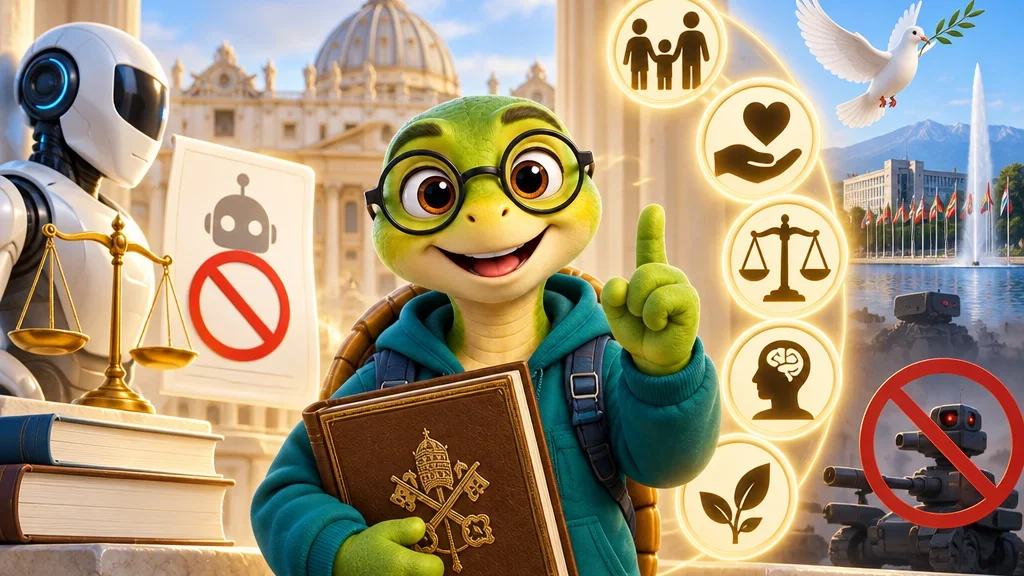
The Pope built his address around five points. First, the future of AI is not predetermined; its direction depends on human choices, and some applications should be rejected when necessary. Second, machines are tools, not persons. Third, some decisions cannot be delegated. Fourth, technology must serve the common good, with benefits shared fairly rather than kept by a privileged few. Fifth, we need institutions that put these principles into practice. Vatican News reports that the five considerations come from his encyclical on AI, Magnifica Humanitas.
Why does he reject legal personhood?
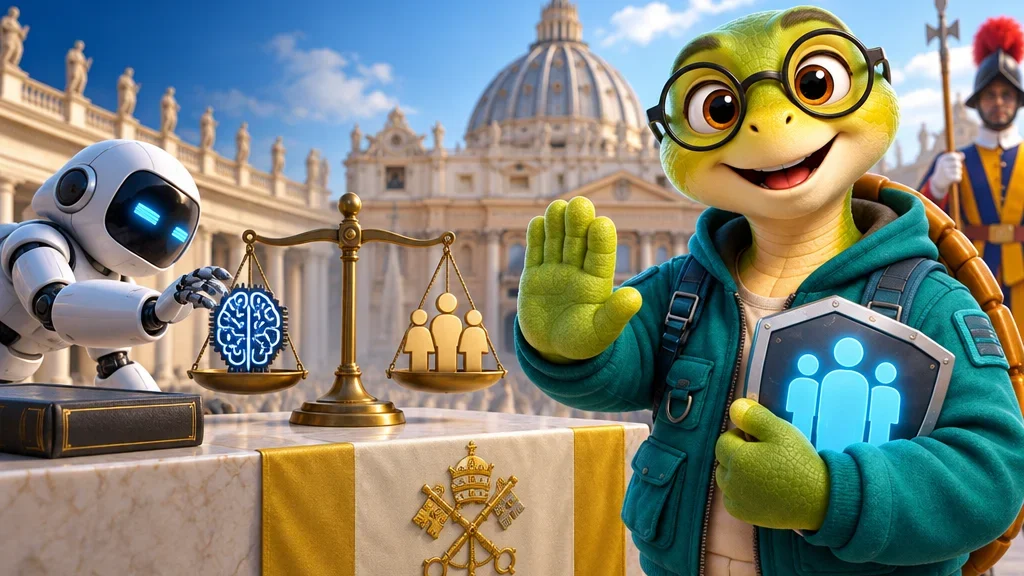
Legal personhood means being recognised as a holder of rights and duties; companies are a familiar example. The Pope noted that some now propose granting AI systems rights, or even legal personhood. In his view, that approach risks obscuring human responsibility. His reasoning: so-called artificial intelligences do not undergo experiences, do not have a body and do not feel joy or pain.
Which decisions must stay with humans?
Decisions affecting life, freedom and the use of force, he said, must always remain under effective, informed and responsible human oversight. Vatican News lists targeting and border control among them. The Pope repeated his call for AI to be “disarmed” and encouraged the States meeting in Geneva in November to take concrete steps toward banning lethal autonomous weapons, a term for systems that can select and attack targets without human intervention.
On institutions he was specific as well: shared standards, independent oversight and clear mechanisms of accountability, including remedies when people are harmed.
Editor’s assessment: what changes in the consciousness debate?
The fact: the address does not use the word “consciousness”; it states that AI does not experience anything or feel pain. Our inference: this is an ethical and theological position, not the result of a scientific measurement. Its real weight lies less in the consciousness question than in the chain of responsibility. Even if uncertainty about a system’s inner life persists, it should never be unclear whose signature stands behind a decision. Which door are we opening? The legal personhood debate is, at its core, a debate about who pays for the mistake. The Geneva talks in November will be the first test of whether this call finds a diplomatic echo.
Ask AI about this article
Opens in a new tab with the question filled in.