

A weekend trip with six friends usually starts in a group chat and stays there: a link to a rental, a spreadsheet someone forgot to share, three dinner ideas and a poll that nobody can find again. One person ends up as the unofficial organizer, copying details back and forth. Google Labs is now testing a different setup with an experiment called Tabletop.
What is Tabletop?
Tabletop is a new experiment from Google Labs, the part of Google where early AI ideas are tested before some of them become regular products. Roman Nurik, Design & Engineering Lead at Google Labs, announced it on 11 November 2026. Google describes it as a space for friends, family and clubs to collaborate in real time and to create custom AI tools that track details, make decisions and keep everyone in sync.
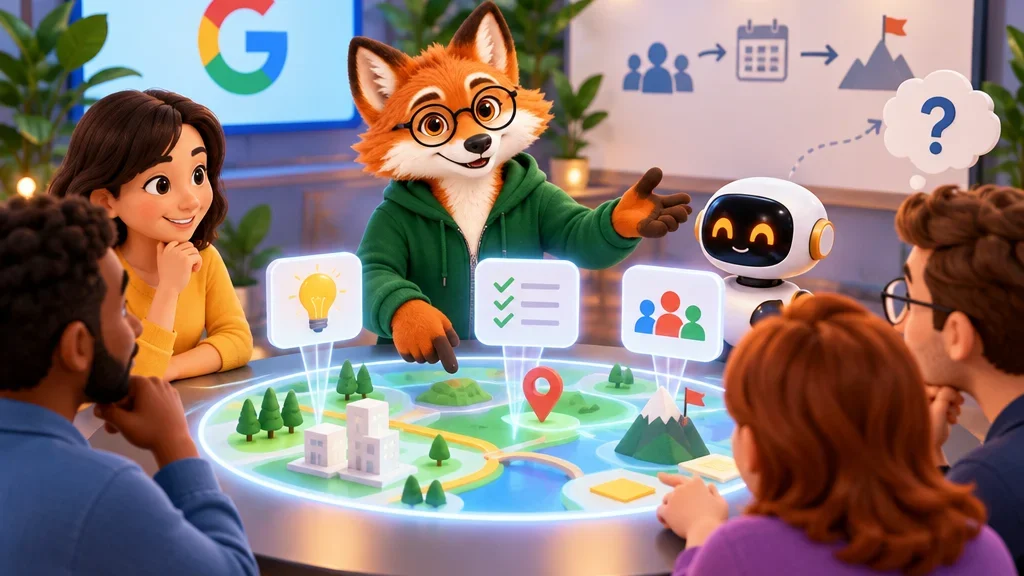
The key difference from a chatbot is the output. You do not only get an answer in text. You address the AI as @tabletop, describe what the group needs, and it builds a small interactive tool inside the shared space.
How does it work?
Google outlines three steps. First, someone sets up a space and adds what the group already has: links, files and ideas. Second, a member prompts @tabletop or picks a starter template, which helps when you know what you are planning but not how to phrase the request. Third, the creator shares an invite link in the existing group chat. Everyone can then use the space at the same time, which Google compares to working together in a Google Doc.
The group chat does not disappear. It stays the place where people talk, while Tabletop holds the plan itself. Nobody has to persuade the whole group to move to a new messenger.
What kinds of tools can it build?
Google’s own examples include interactive trip itineraries, dinner polls, expense splitters and tournament brackets. The product page adds a spinnable wheel for choosing dinner spots on a road trip, live rosters for a club, an interactive seating chart for an office party and a chore chart that turns household tasks into points toward a shared weekly reward. Members can vote, plan and track details in one place instead of across several apps.
Can the tools change after they are built?
Yes, and this is the most practical part. Google says nothing is set in stone: you can ask @tabletop to tweak a rule, reshape a tab or build something new on the spot, without starting over. One example on the product page turns the ball in a simple Pong game into a bouncing pickle for a pickleball club. Another asks Tabletop to make a seating chart interactive so guests can be dragged between tables.
Our assessment: the organizer’s job gets smaller, not shared automatically
The useful idea here is not that AI writes a plan. It is that the plan becomes a shared object everyone can touch, so updates stop depending on one person relaying them. That is a real handoff improvement. Still, a tool built from a prompt is only as good as the links and rules the group gives it, and someone still has to decide what counts as the final answer when a poll is close or a budget changes. Before you build anything, agree on one question: who takes the next step? Tabletop can make that step visible; it does not remove the need for it.
Who can use it now, and what is still unknown?
Access is limited. Tabletop is rolling out in the United States only, for people aged 18 and over, through a waitlist. Google calls it an invite-only experiment and says it opens up new tables every week. The sign-up page is labs.google/tabletop.
Several basics are still open. Google has not said which AI model powers Tabletop, and its announcement mentions no pricing and no timeline for other countries. As with every Labs experiment, features can change, and there is no guarantee it will become a full product.
Ask AI about this article
Opens in a new tab with the question filled in.