
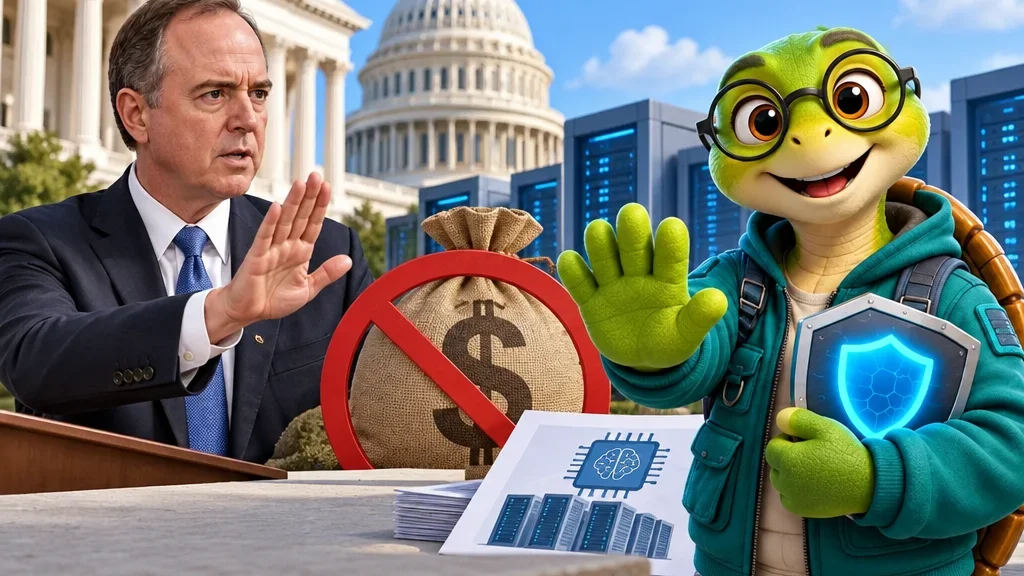
If an AI company can no longer cover its debts, should Washington step in with public money? US Senator Adam Schiff of California wants companies and their investors to bear those losses. In a November 19 opinion piece, the Democrat urged Congress to make that position clear before the industry faces a downturn.
What Schiff is reported to be preparing
According to Bloomberg News, citing Semafor’s reporting based on a person familiar with the matter, Schiff plans to introduce a resolution when Congress returns. The reported proposal would state that Congress should oppose bailouts for companies and wealthy investors in the AI sector if the boom falters. The report describes an intended filing.

Where Schiff sees financial risk
Schiff points to the debt used to build data centers. In his account, some smaller infrastructure companies borrow against assets such as chips and against future lease payments they expect to receive. He also describes financing through special-purpose vehicles, entities set up for a particular transaction or project. When banks, private lenders, insurers and pension funds finance the expansion through such structures, Schiff argues, it can be harder to see who would absorb losses.
What the House proposal calls for
Representatives Greg Casar and Maxine Waters led the introduction of a separate House resolution on October 29. It opposes emergency loans and direct capital support for AI companies that cannot meet their financial obligations. It calls for direct support for workers and for protecting pension and retirement savings.
One question makes these proposals easier to assess. Who would receive public money in a downturn? Financing structures can obscure who holds the risk, so any future rescue proposal should spell out who would receive support and where the losses would land.
Ask AI about this article
Opens in a new tab with the question filled in.