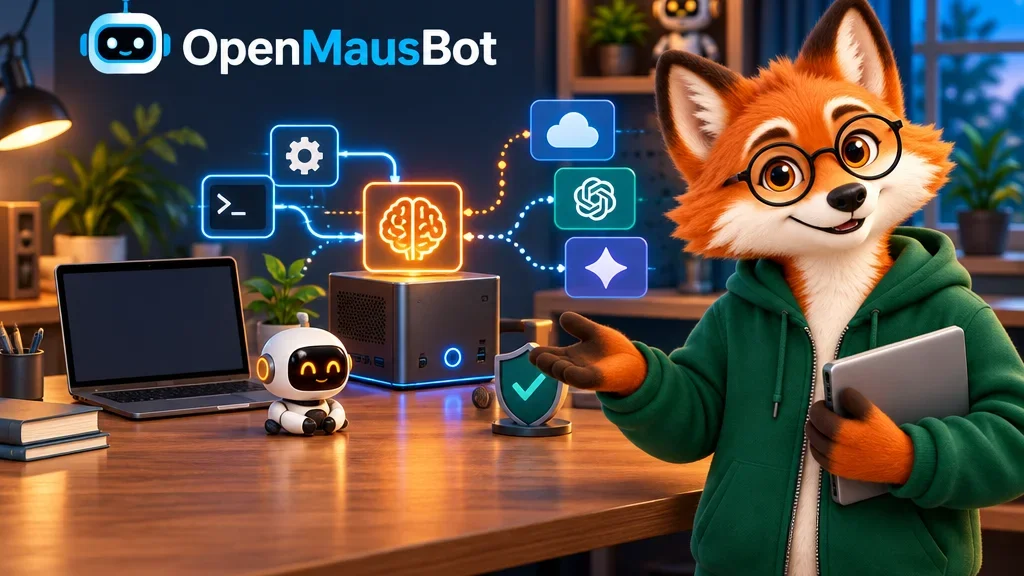
Grok Bot made a simple idea popular: a chat app where each contact is a bot with its own job. The catch for many teams is where that work runs and which model does it. OpenMausBot, an open-source project on GitHub, takes the same shape and moves the engine onto your own machine, using the AI command-line tools you may already be signed in to.
What OpenMausBot is and who is behind it
The repository, published under developer Milind Soni’s GitHub account, describes OpenMausBot (also called MausBot, and formerly OpenGrokBot) as an “open-source Grok Bot alternative with a virtual machine that bots can use”. It states plainly that it is not affiliated with xAI, Meta, OpenAI or Manus; Grok is named as a trademark of its owner. The code is under the Apache-2.0 licence, an open-source licence that allows use, modification and redistribution. One part, the enterprise/ folder, is only source-available under its own licence. At the time of writing the project shows about 22,400 stars and 3,100 forks on GitHub.
How it works and where your data stays
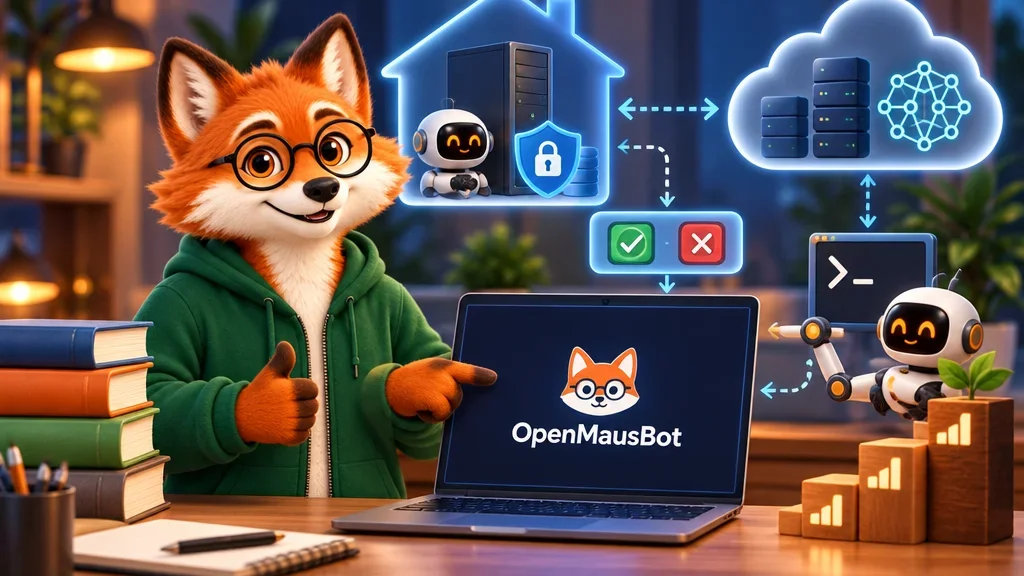
OpenMausBot is a desktop app for macOS (Apple silicon and Intel, signed and notarized), Windows x64 and, as a beta, Ubuntu 24.04. Each bot is a real agent: the app does not bring its own model but drives the agent command-line tools installed on your computer, namely claude (Claude Code), codex and grok. A small local “harness” server on 127.0.0.1, meaning your own machine, starts and manages these agent processes. The project says there is no proxy in the middle, and conversation transcripts are stored locally in the ~/.openmausbot folder.
That is not the same as working offline. The CLIs still talk to their providers under your existing logins and plans; what stays local is the app, its orchestration and the chat history.
What the bots can do
Every bot has a model picker, and you can switch its model during a conversation. A bot can get a cloud Linux desktop, provided through a service called Boat, or, after you opt in, control your own computer on macOS or on Ubuntu with Xorg. Connections to more than 500 apps run through Composio, an integration service. Bots can speak their replies or hold voice calls, with voices from ElevenLabs, Fish Audio, Grok, built-in Mac voices or Chatterbox.
Channels keep separate contexts apart, each with its own transcript and its own roster of bots. Whole teams or departments can be imported and shared as Markdown or YAML files, and triggers start work on a schedule or from a webhook.
How much control you keep
When a bot wants to run a shell command, edit a file or needs an answer, OpenMausBot shows an approval card in the chat. Control of your own computer stays off until you enable it. Those two switches are where a person decides what an agent may actually touch.
Automation from scripts and other AI tools
An openmausbot command-line tool lets scripts and CI pipelines drive the bots; building from source or using the CLI requires Node 24 or later. The project also ships a stdio MCP server. MCP, the Model Context Protocol, is a standard way for one AI app to call tools in another, so an external client can hand jobs to an OpenMausBot team.
How mature is it?
Very young and very busy. The releases page lists versions 0.1.152 to 0.1.158 between 10 and 14 November 2026 alone. They added a burst mode that splits large jobs into parts running side by side, automatic detection of Ollama, replies that stream into the chat, forking a conversation from any message and letting bots change app settings from chat with an undo option. The repository also shows more than 700 open issues and over 360 open pull requests.
Our take
The interesting part is not that it copies Grok Bot, but that it separates the chat interface from the model. If your team already pays for Claude and ChatGPT plans, you can give a writing bot one model and a coding bot another, without a new subscription layer. The pace of releases is also a warning sign: behaviour can change from one day to the next. Our suggestion is to start with one bot on a cloud desktop, keep the approval cards on and enable control of your own machine only once you know what that bot does. Who takes the next step? Give that answer to a person first, then to the bot.
Ask AI about this article
Opens in a new tab with the question filled in.