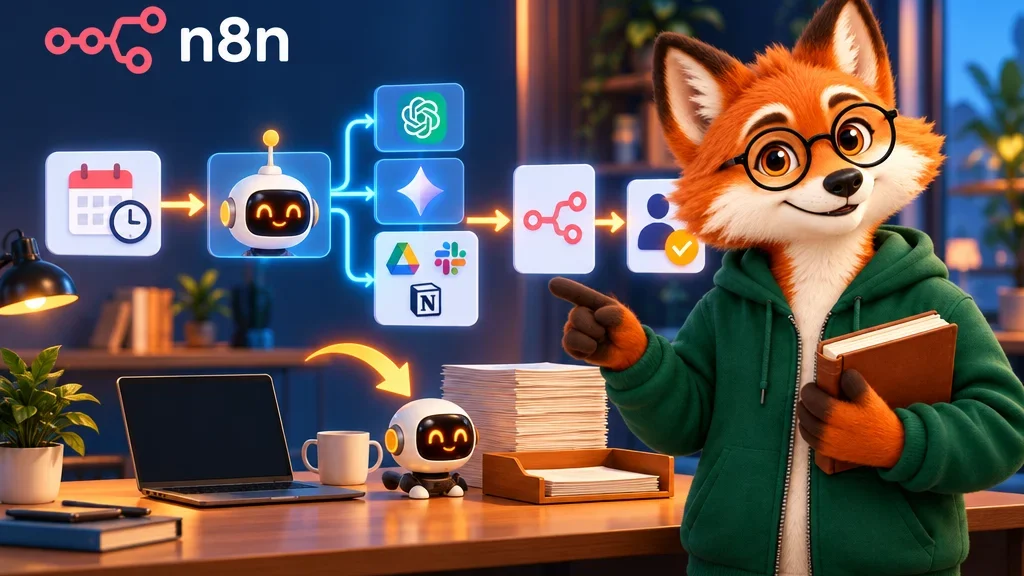
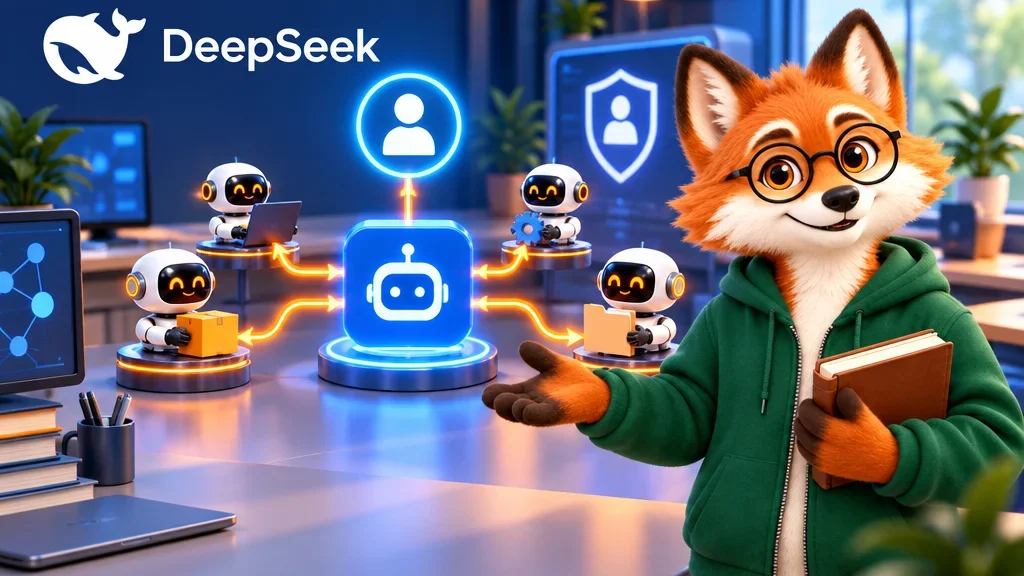
Most teams that use AI coding agents hit the same wall: the agent is fast, but a person still has to open every session, hand over every task and check every result. DeepSeek has now published code that tries to move that bottleneck. Its Harness team released dsh-superagent-prototype, an open-source “super-agent” that turns requests in a GitHub repository into tracked work and answers with results such as pull requests.
What exactly did DeepSeek release?
The repository sits in DeepSeek’s official GitHub organisation and is published under the MIT licence, which means anyone may use, modify and redistribute the code, including commercially. It is packaged for DeepSeek Harness, the company’s agent runtime, and is scoped to a single GitHub repository. GitHub is required; Feishu, the team chat app, is an optional second input.
The workflow is simple to describe. When a permitted person asks the agent for something, it opens a work item, does the work in its own session and folder, and replies in the original conversation, for example with a pull request. A web panel shows the things that need a human decision.
DeepSeek is unusually direct about the status. The README calls the code a research prototype “for reference only, not an official DeepSeek product”, says it may still contain bugs and is not production-ready, and notes that it is not identical to the version DeepSeek uses internally.
How does the router-worker design work?
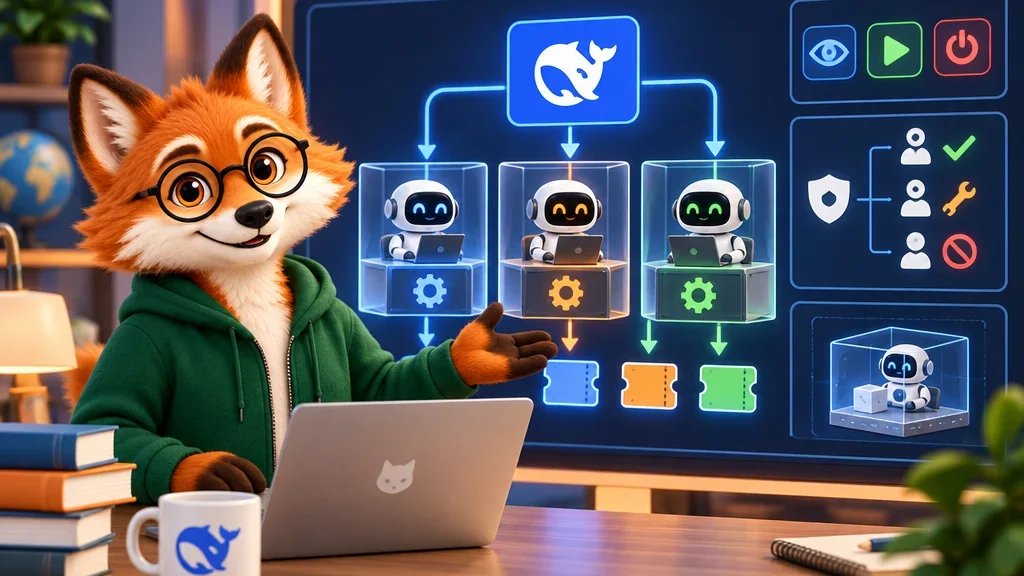
The design has two layers. The router is a long-running main session. It receives events (DeepSeek calls them triggers), decides which ones deserve work, and manages tickets, the unit of work. By prompt rule it avoids reading code itself; its job is routing, not programming.
Each ticket is handed to a separate worker session with its own working directory. Workers get a restricted toolset: according to the architecture document they cannot ask or present things to a person, cannot start or message other sessions and cannot edit external documents. Once a ticket ends, further tool calls are refused. Only the web panel can change the execution environment.
In practice this separates the conversation from the execution. One coordinator keeps listening, while several isolated workers can run in parallel without stepping on each other’s files.
Why build an agent like this?
The motivation is human attention. DeepSeek’s team estimates that one person can typically supervise only three to five active agent sessions at the same time, Interesting Engineering reported. The super-agent idea is to let a central system split larger jobs, distribute them and track progress, so the person only steps in where a decision is needed. The README states the goal plainly: take as little human attention as possible and give as much value as possible.
DeepSeek also shared an experiment in which the approach finished a task in just under 16 minutes, compared with more than 29 minutes for a conventional setup. Interesting Engineering pointed out that this does not show how broadly the result applies or how task quality was measured, so treat it as an early internal data point, not a benchmark.
Does it really fix bugs on its own?
This is where the hype and the documentation part ways. Online demos describe an agent that watches group chats and submits a fix before anyone has finished typing. The shipped prototype is far more cautious. Its default mode is called observe: the agent evaluates “inferred” candidates it spots on its own, but a positive result is only logged as “would accept”, and nothing is actually started.
Proactive work requires switching to auto mode and defining at least one matching team rule. A third mode, off, disables inferred work completely. Explicit requests from people on the allowed list work in every mode, while messages from unlisted people that address the agent are ignored by default.
What are the safety rules and limits?
The permission model is the most interesting part. The host enforces allowed lists, rules and mandates, and the documentation states that message content cannot change those permissions. That matters, because a chat message or a code comment could otherwise try to talk the agent into doing more than it should. A stop issued from the panel takes effect directly and is recorded.
The authors do not claim the problem is solved. The architecture document lists how far trigger fields can be trusted as an open question, and Interesting Engineering highlighted security, privacy and reliability as major challenges. Some designs described in DeepSeek’s accompanying essay are not implemented in the prototype at all.
What does this mean for your team?
For developers, this is a well-documented blueprint rather than a tool to plug into production tomorrow. If you want to try it, run it in an isolated environment, start in observe mode and read the “would accept” decisions before you allow anything automatic. Keep human review on every pull request it opens.
Editor’s assessment: The fact is that DeepSeek has open-sourced a router-worker agent under a permissive licence. My inference is that its real value lies less in autonomy than in the boring parts: tickets, mandates, isolated workers and an explicit default of doing nothing unasked. That is exactly where teams usually cut corners when they wire agents into chat. The open question for anyone adopting the pattern is not how many agents you can run, but who takes the next step when one of them gets it wrong.
Ask AI about this article
Opens in a new tab with the question filled in.