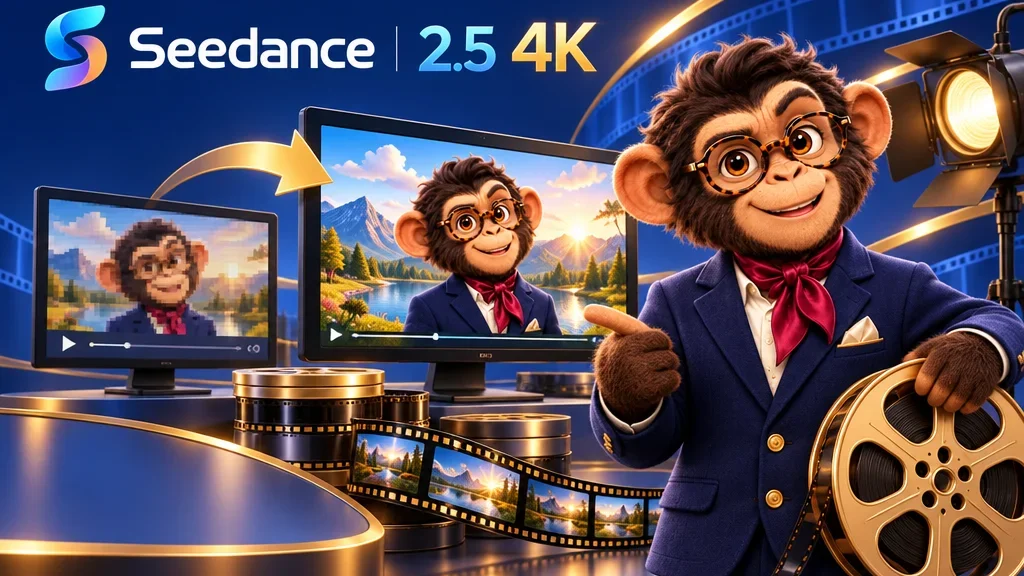
Picture a close-up: a character turns a page, the fingers move a few millimetres, and the light in the eyes shifts slightly. In a 1080p clip that detail often dissolves. Seedance 2.5 4K, the new top tier of ByteDance’s Seedance 2.5 video model family, is built for exactly that kind of shot, and it comes with a working method that matters as much as the resolution: a cheap draft first, the expensive 4K render last.
What Seedance 2.5 4K is and who can use it
Volcano Engine, ByteDance’s cloud platform, released Seedance 2.5 4K on 23 October 2026. BytePlus, the international arm, describes it as the most capable model in the Seedance 2.5 generation and aims it at film and television work. Native 4K here means the model generates the clip at 4K resolution itself, rather than enlarging a smaller video afterwards. Access is still narrow: according to TechNode, the model is available for trials by selected enterprise customers, and film-production and post-production companies in China and abroad have started testing it on storyboards, previs, background editing and animation.

How Draft mode works
Draft mode lets a team generate 480p previews of a shot at lower cost. Previs, short for previsualisation, is the rough version of a scene used to plan camera, timing and composition before real production. With Draft, you can test several storyboard variants or a single difficult shot in low resolution, choose the direction that works, and only then generate the final version in 4K. BytePlus frames it plainly: room for revisions during development, 4K reserved for the final result.
What changes beyond resolution
BytePlus lists three improvements. First, faces and small movements: specialised training is meant to capture facial expressions and subtle motion more fully. Second, colour: the model supports 10-bit colour depth, which allows finer gradations and smoother transitions than the common 8-bit. Third, source retention: in reference-based generation and video editing, the model is said to keep the clarity and colour of uploaded material, and fine text on posters or product packaging should stay more legible. A striking frame. What about the motion? That is the part these claims address, but so far the evidence comes from the company and early customers, not from independent tests.
Why draft-first matters for budgets
The fact: Draft previews are cheaper than final 4K generations, and the documentation separates the two stages. The inference: for premium work such as a product spot or a film previs, most of the cost of AI video lies in rejected attempts, not in the shot you keep. Moving those attempts to 480p changes the calculation more than the 4K price itself. What the sources do not document is how closely a 4K render matches the chosen draft in every detail, so teams should check that on their own material.
Our assessment
Seedance 2.5 4K is less a resolution race than a workflow decision. The interesting part is the split between exploration and delivery, which mirrors how film crews already work with rough cuts and final grades. As long as access is limited to enterprise trials, the claims about faces, colour and text stay promising but unverified for most creators.
Ask AI about this article
Opens in a new tab with the question filled in.