Picture a 30-second battle scene: twenty workers, a spear out of the dark, a village that suddenly has to fight. If the first take misses, a full-resolution render is an expensive way to find out. BytePlus built a Draft mode into Seedance 2.5 4K for exactly this situation.
What is Seedance 2.5 4K?
Seedance is ByteDance’s family of AI video models, offered to businesses through BytePlus. In a post dated 27 October 2026, BytePlus calls Seedance 2.5 4K the most capable model in the Seedance 2.5 generation. The company says it renders textures, contours and fine details more fully, shows finer faces, keeps source material more faithfully and supports 10-bit colour, a colour depth that leaves more room for grading.

How does Draft mode work?
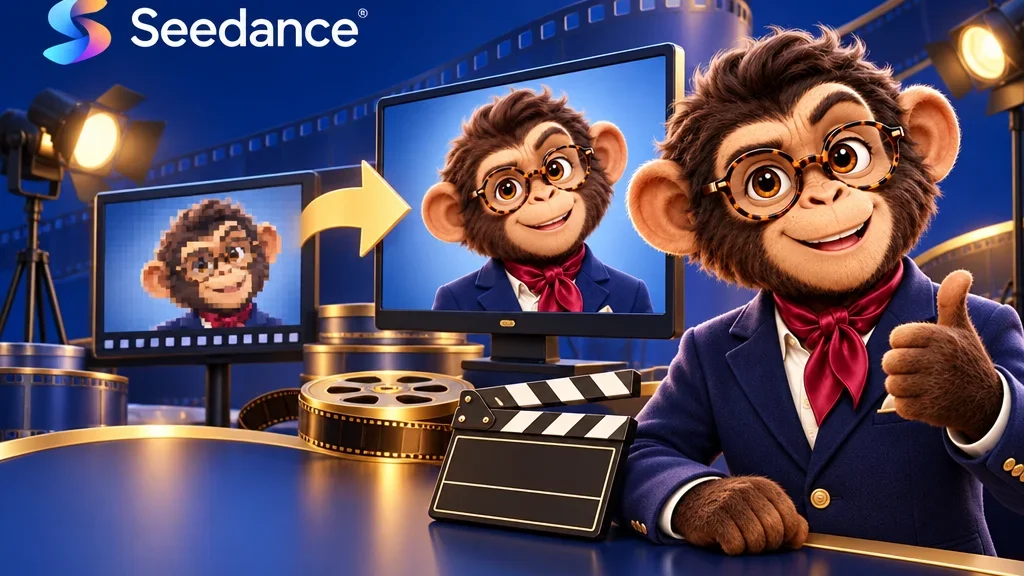
A draft is a cheap low-resolution preview. According to BytePlus, teams can use 480p previews to test storyboards and refine individual shots, then generate the final output in 4K once they are happy with the direction.
The ComfyUI documentation from Comfy Org describes the mechanics. Resolution is locked to 480p in draft mode. Each run returns the preview plus a draft_task_id, an identifier the final render uses. The final step offers 1080p or 4K and reuses what the draft was created with: the prompt, the input, the duration, the aspect ratio and the audio setting.
How long can a draft wait?
Comfy Org’s documentation says drafts stay renderable for seven days after they are created. After that window, you would have to start again.
Who can use it today?
BytePlus labels Seedance 2.5 4K as a model for enterprise. In ComfyUI it is available as partner nodes for text to video, first-last-frame to video and reference to video; partner nodes require a login. Neither source lists prices or credit costs for the 4K tier.
Why does a draft step matter for cost?
The documentation frames Draft mode as a way to avoid paying for full-resolution generations you might throw away. The draft does not make a weak shot better. It lets you see the weak shot early, while it is still cheap.
Our assessment
Fact: the final render reuses the draft’s prompt, inputs, duration, ratio and audio. Inference: this turns video generation into a two-stage workflow, closer to an offline edit and a final conform than to a single lucky roll. A striking frame. What about the motion? Neither source says the 4K result will match the 480p preview frame by frame, so check movement and character consistency again in the final. Plan the shot list inside the seven-day window, and treat the 480p pass as a test of camera, motion and timing rather than of texture.
Ask AI about this article
Opens in a new tab with the question filled in.