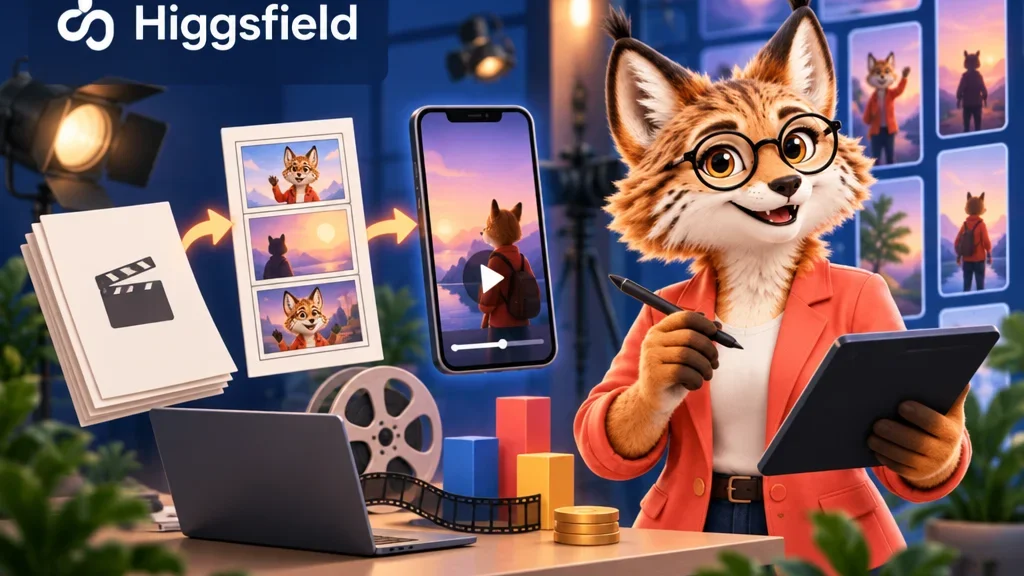
Picture a three-minute vertical episode: a young woman hesitates at a stranger’s door, a family photo sits on a shelf, and the same necklace has to appear in every shot. Keeping that face, that room and that necklace identical across dozens of clips is the tedious part of microdrama production. Higgsfield’s Short Drama Studio, introduced in a company post dated 15 November 2026, is built to take over exactly that bookkeeping.
What Short Drama Studio does
A microdrama is a series of very short vertical episodes, usually a minute or two each, built around a strong conflict and a cliffhanger at the end of every episode. Short Drama Studio turns a written script into such a series. You upload the script file (up to 10 MB), pick a format and a visual style, and start the analysis. In a few minutes the studio splits the script into episodes and lists the characters, locations and props it found. Higgsfield names 15 styles, with Higgsfield Cinematic as the default and options such as K-Drama, Anime, Noir 3D and Classic 2D.
How it keeps cast and sets consistent
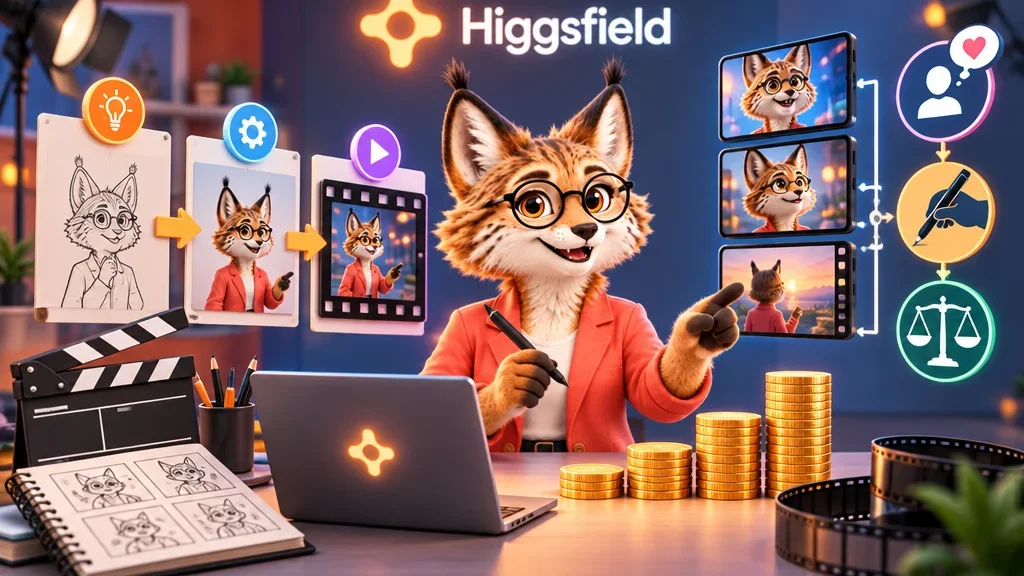
The work runs in three stages: Script, Cast & World, and Episodes. In Cast & World you review separate tabs for characters, locations and props. Each character gets four free face options, or you upload your own image; photos of real people require image rights. Locations and props are generated as reference images, so the same objects can return in later scenes. Only then do you plan an episode, which the studio breaks into scenes and clips. Voices are assigned to characters, with a separate narrator voice.
Drafts first, 1080p last
Each clip can be generated as one to four low-resolution drafts. You pick what works and only then render the final episode in 1080p. You can also hand the whole job to an agent: a chat panel accepts change requests, and an auto-run mode builds the project on its own. Higgsfield warns that this autopilot is faster but costs more, and that actual credit use may vary.
What it costs
Neither Higgsfield page lists prices. Each action button shows an estimated credit cost before it runs. Face options are free, analysis and casting are comparatively cheap, and generating the episode uses most of the credits.
Can you drive it from Claude or ChatGPT?
Yes. MCP (Model Context Protocol) is a standard that lets an AI assistant call outside tools. Through Higgsfield MCP you can connect Claude or ChatGPT and ask the assistant for a short drama. Those generations still draw on your Higgsfield credits.
Limits worth knowing
The studio works on desktop only; Higgsfield has not announced a date for mobile. Every prompt and upload passes content checks, and a blocked prompt may be rewritten automatically, which can change details of a scene. Higgsfield itself advises checking the result against the original script and reviewing scenes for unexpected changes before export. You can export a 1080p episode or an editing package with the script, episode notes and clips, then add music or subtitles in another editor.
Our assessment
The facts show a tool that automates logistics: breaking down the script, holding the cast together and keeping props in place. Where does the eye go first in a microdrama, though? Usually to a face at the turning point of the episode. That is our reading, not a Higgsfield claim: the draft-first design is useful precisely because it makes those key moments cheap to redo. If a reaction looks flat, you can try another draft before paying for 1080p. Writing the conflict and the cliffhanger, and judging whether an expression lands, still sits with you.
Ask AI about this article
Opens in a new tab with the question filled in.