

When researchers moved an AI agent’s software setup from Claude Opus 5.5 to Gemini 3.8 Flash, its office-task score fell from the Gemini starting setup’s 73.89 to 68.41. What would help Gemini make better use of the inherited software? A preprint from Google and Penn State reports that carrying over the history of the changes, along with the software itself, helped in that experiment.
Which part of the agent changes?
The harness is the software around the model. It supplies instructions, manages context and controls how the agent calls tools. The model’s learned parameters stay fixed during each optimization run. In each of ten rounds, an optimizer proposes five harness edits, selects a revision using feedback from tasks set aside for development, then starts the next round with the retained version.
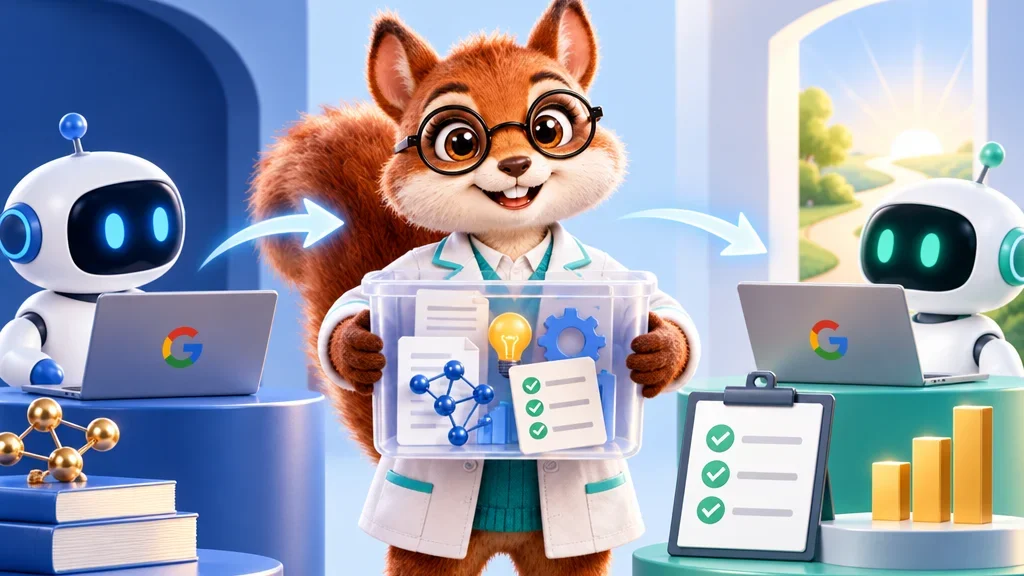
Self-Improvement Memory, or SIM, gives the optimizer a record of the problem each edit addressed, the reasoning behind the change, the expected and measured outcomes, and the setting in which it was evaluated. When the model or task set changes, that record helps the optimizer decide which fixes to keep or revise. Failed attempts remain in the history too.
How much did the history help?
In the office-task comparison, three runs began with the same Claude-tuned harness at 68.41 points out of 100. After optimization on Gemini, the run that carried only the harness scored 73.42. A record of the problems alone brought the score to 79.22, and the full history reached 84.75. Optimizing Gemini from the original harness reached 82.98. The three matched starts show how much difference the contents of the log made in that run.
A separate coding experiment changed the task set and repeated the comparison ten times. Within each pair, the runs inherited the same harness and had the same budget for trying changes. The full history led in nine pairs, with a mean advantage of 2.36 points. One pair favored continuing without the record.
When does a fresh start help?
The experiments used compatible software interfaces, and the comparisons outside coding ran once per condition. Even within the same model family, reuse could lose. On Gemini 4 Argon, optimizing from scratch finished 0.8 points ahead of carrying forward the harness and memory from the previous model.
If you’re deciding what to carry into a model upgrade, I’d save the reasoning and outcomes behind the edits and rerun the comparison on tasks the optimizer never saw. The Argon result gives you a reason to keep a fresh start in that comparison. The unseen tasks help you tell whether a familiar fix still works when the agent faces something new.
Ask AI about this article
Opens in a new tab with the question filled in.