Suno Music’s In The Cut visits the DEATHPIXIE writing camp at Glenwood Studios in Los Angeles. The episode, published on 23 October, follows a team developing songs for an animated artist: the character’s story, human vocal performances and production choices develop together, with Suno used within that process.
An animated artist built by a team
Executive producer and songwriter Jay Stolar describes a project inspired by the idea of an animation studio for music. Animation, storytelling, social media and songwriting contribute to the same artist rather than existing as separate pieces. DEATHPIXIE’s fictional setting is New Tokyo, a dark city where music and DJing provide the character with a place of peace amid the voices of monsters.
The session brings together songwriter and voice actor Bailey Flores, artist and songwriter 8ae, producer Gino The Ghost and DJ and producer Flosstradamus. Participants connect the project’s artwork and world to their interest in anime, while the character gives them room to explore rap, screams and high-energy rage performances.

Working toward the character’s voice
Gino The Ghost and Flosstradamus discuss running the material through a Persona several times to bring it closer to DEATHPIXIE’s voice. The step is presented as an iterative part of shaping the character’s sound. Suno’s Persona feature preserves a song’s vocal and stylistic qualities for reuse in new material.
Writing a hook as a conversation
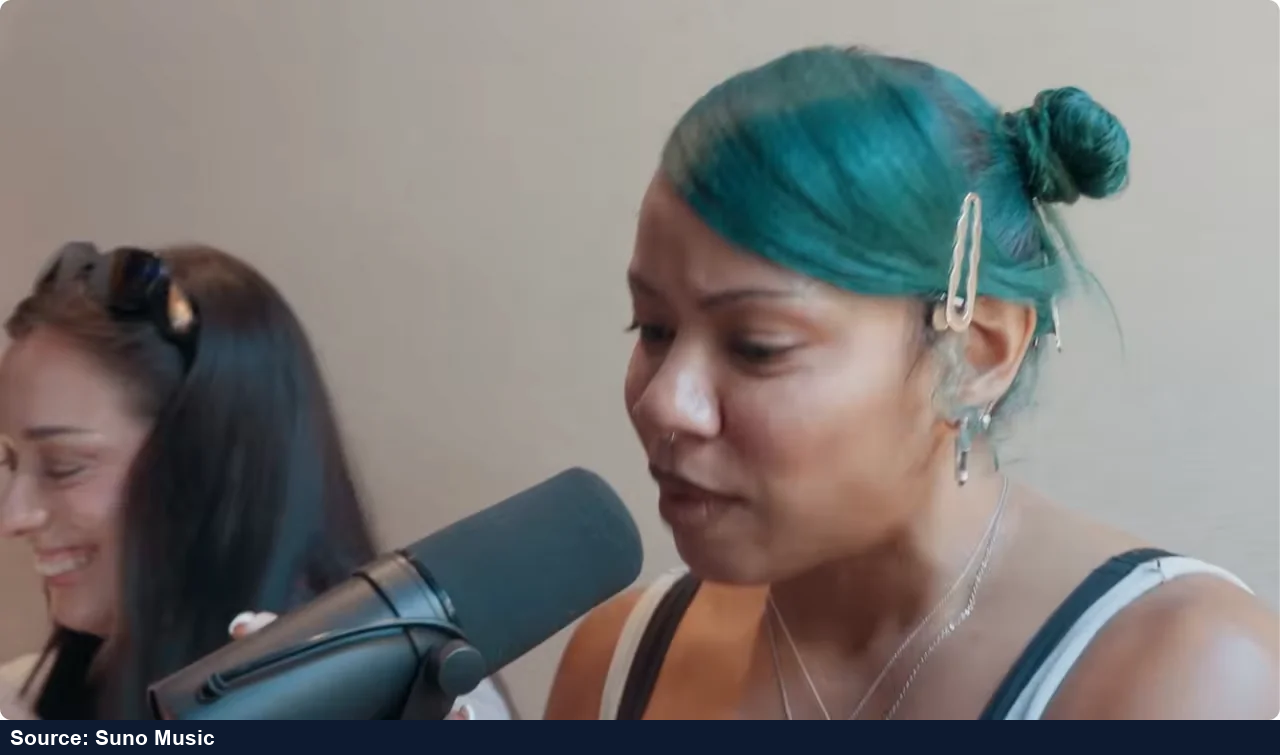
The writing session turns to a song constructed as a conversation between DEATHPIXIE and another character. The team wants a short, recurring hook before the existing refrain. They try brief exchanges aloud, respond to each other and adjust where lines should be split. The sequence follows the choices being made in the room as the performers find a delivery that fits the character.
Separating parts and replacing the drums
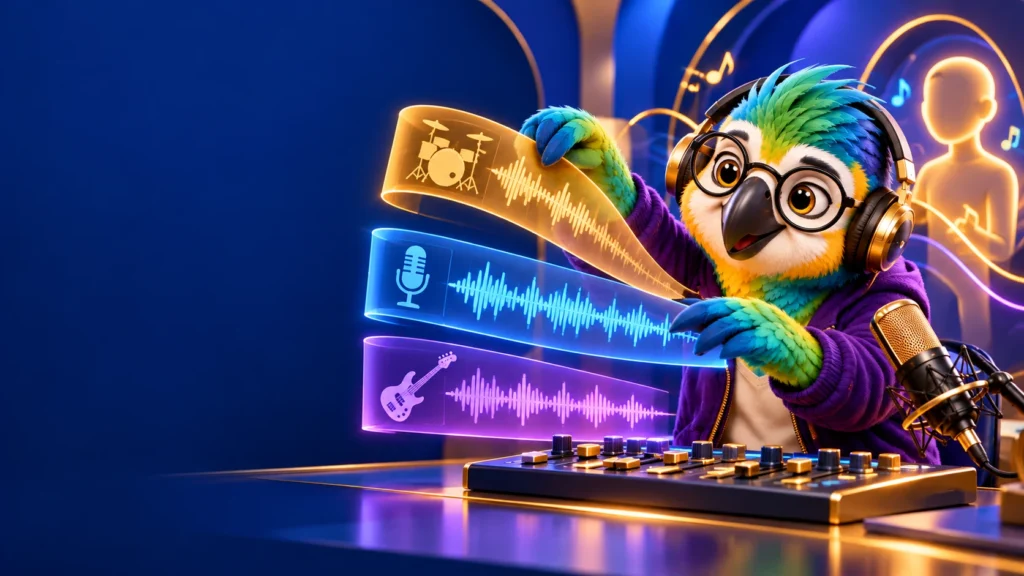
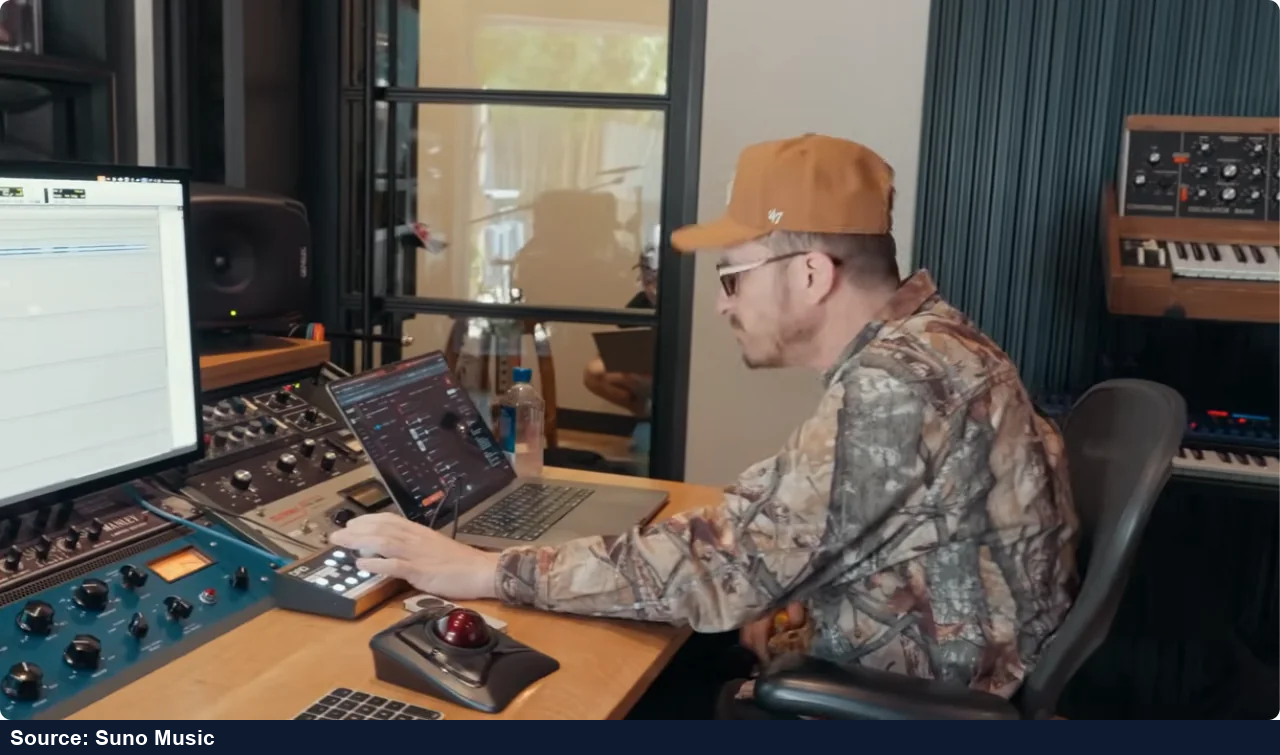
Flosstradamus describes the stems in this session as cleaner than the complete generation. He explains that he has removed the original drums, leaving the other musical elements available for further production. Suno’s stem tools allow individual components, including drums and vocals, to be separated; here the remaining material becomes the basis for rebuilding the production.
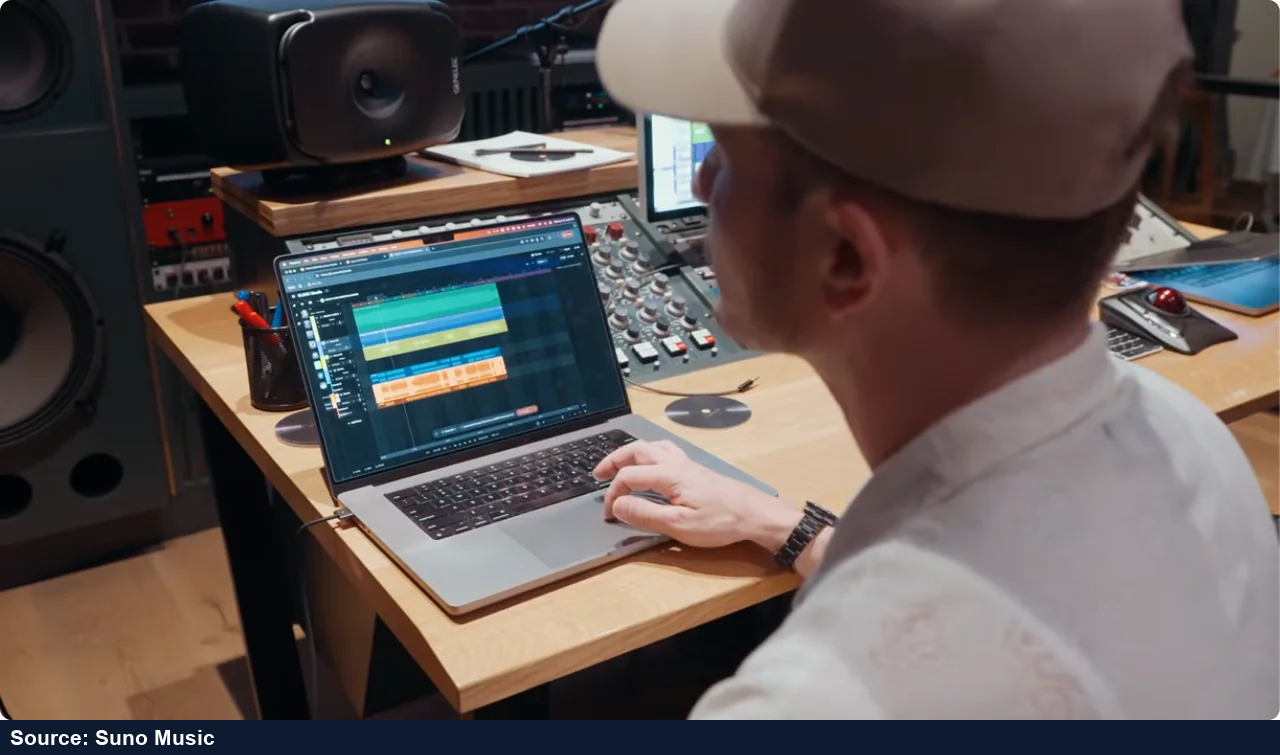
Tracking melodies and trying another chord
The episode then returns to vocal recording. A performer is asked to sing the phrase where it currently sits while the team considers landing on a different chord. This places melodic delivery and harmony back into the same hands-on loop as the earlier hook writing and production changes.
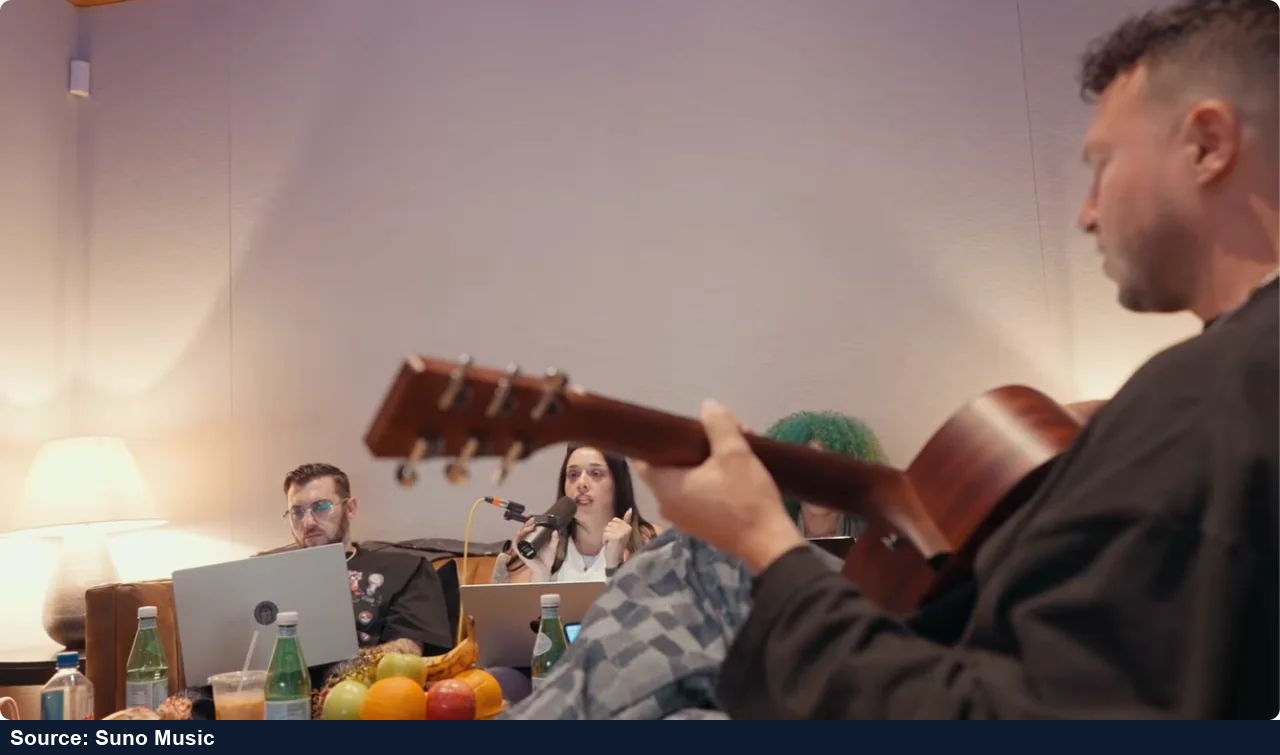
The project’s human creative process
Stolar closes by describing the people writing lyrics, developing melodies, playing chords and creating animation as the core of DEATHPIXIE. In his account, the tracks emerge from those decisions together with the tools used in the studio. The episode ends with an invitation to animators, songwriters and storytellers who connect with the project.
Feature references: Suno Personas and stem extraction.