

A catalog of course material
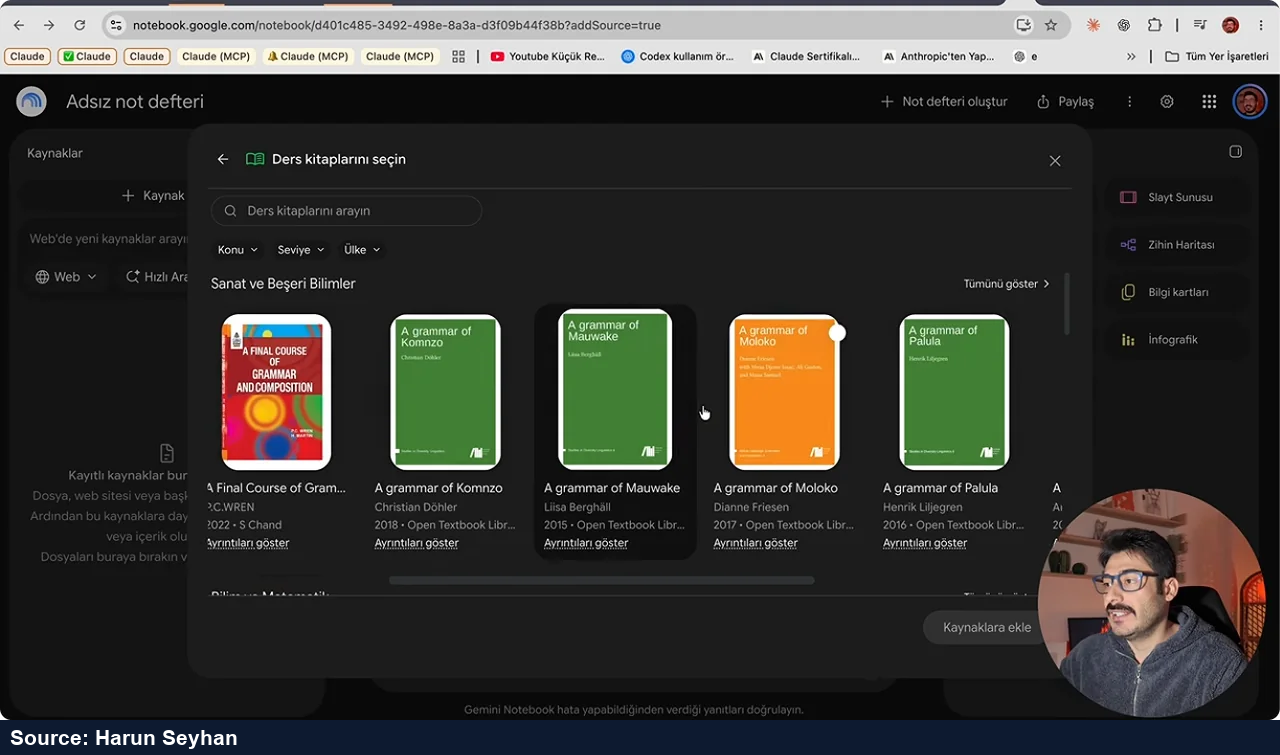
Harun Seyhan opens the textbook option under Add sources in Gemini Notebook and shows its country, level and subject controls. He highlights the relevance of the catalog to study material from the United States and India. Google’s 29 October announcement identifies OpenStax, Open Textbook Library and S Chand Publishing among the providers of hundreds of textbooks available at no charge. Answers can refer directly to the selected books, while their content can become quizzes, flashcards or study guides.
Record a class or meeting on mobile
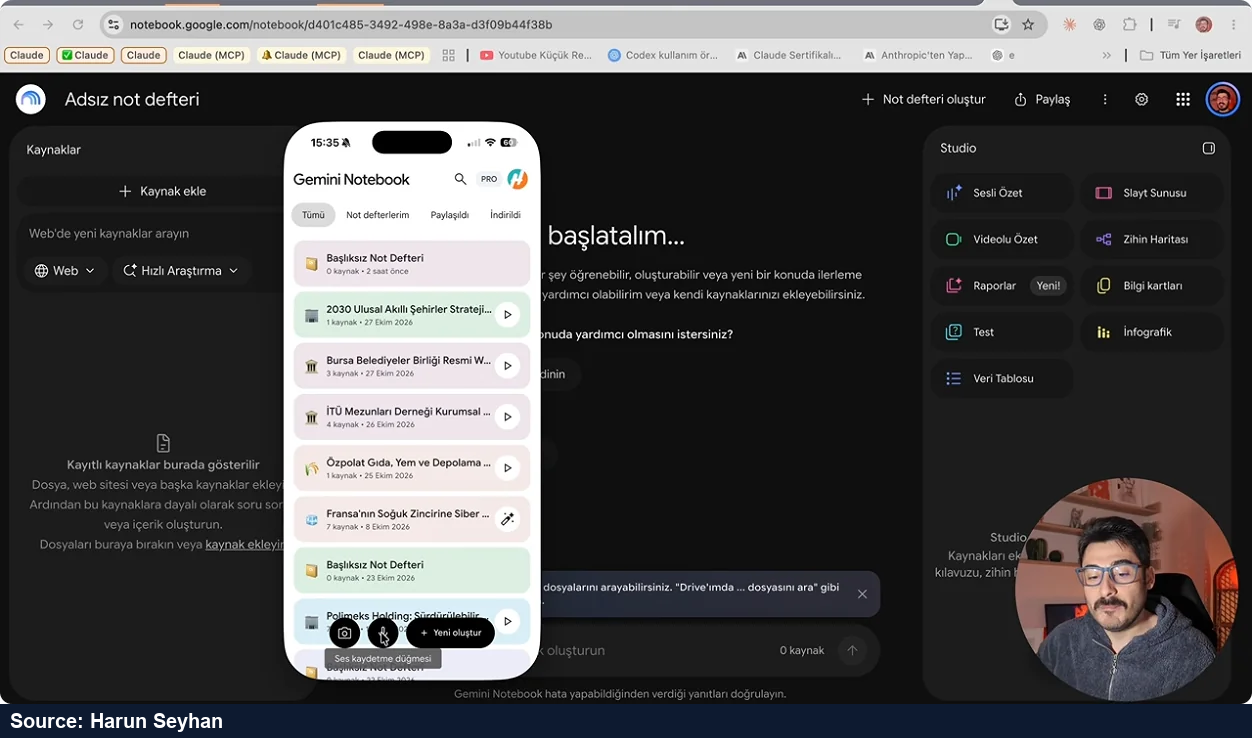
The roundup then moves to the mobile app’s recording button. The example is a class or meeting whose spoken content is to become notebook material. Google’s source-import help confirms a maximum recording length of one hour and specifies that the transcript, rather than the original recording, is stored as the source. This recording function was announced in September; the new textbook catalog expands a workspace that already includes audio-to-source input.
Drive in the demonstrated workspace
The video also shows a Drive connection panel and an interface message about finding Drive files from the conversation. Harun Seyhan demonstrates this in his own workspace and notes that Drive is the listed connection there. His expectation that more applications will follow is presented as an expectation. Existing Drive-source support includes importing accessible files and syncing their contents. In the roundup, textbooks, spoken notes and files form three different routes into the notebook’s source collection.


