
Science & Research

Google’s Suncatcher satellite returns its first AI-generated response

An onboard TPU ran Gemma 4 and returned an answer from orbit in Google’s prototype test.

Source: Harun SeyhanNovember 2, 20263 sections
18
On this page
  1. A response from the satellite
  2. From launch to an operating payload
  3. The next test stage
  4. Source
A scientist squirrel holds a computing satellite with Earth in the background.AI in orbit

Conceptual cover created with AI.

A response from the satellite

Harun Seyhan’s roundup highlights Google’s experiment running AI hardware aboard a satellite. Google’s 30 October update reports a completed milestone: a data-center-class TPU in orbit produced an AI response. The onboard Gemma 4 model answered a prompt asking for a short poem about being in space, and the result reached the ground during a pass near Svalbard, Norway.

The channel shows Google’s background explanation of Project Suncatcher and orbital computing.

From launch to an operating payload

The prototype had launched on 1 October. The intervening work involved bringing the satellite and computing hardware into operation and carrying out initial machine-learning tests. After the first answer, the team sent further prompts, including requests about the payload’s technical status. The test involved computation on the satellite and a response sent back to Earth.
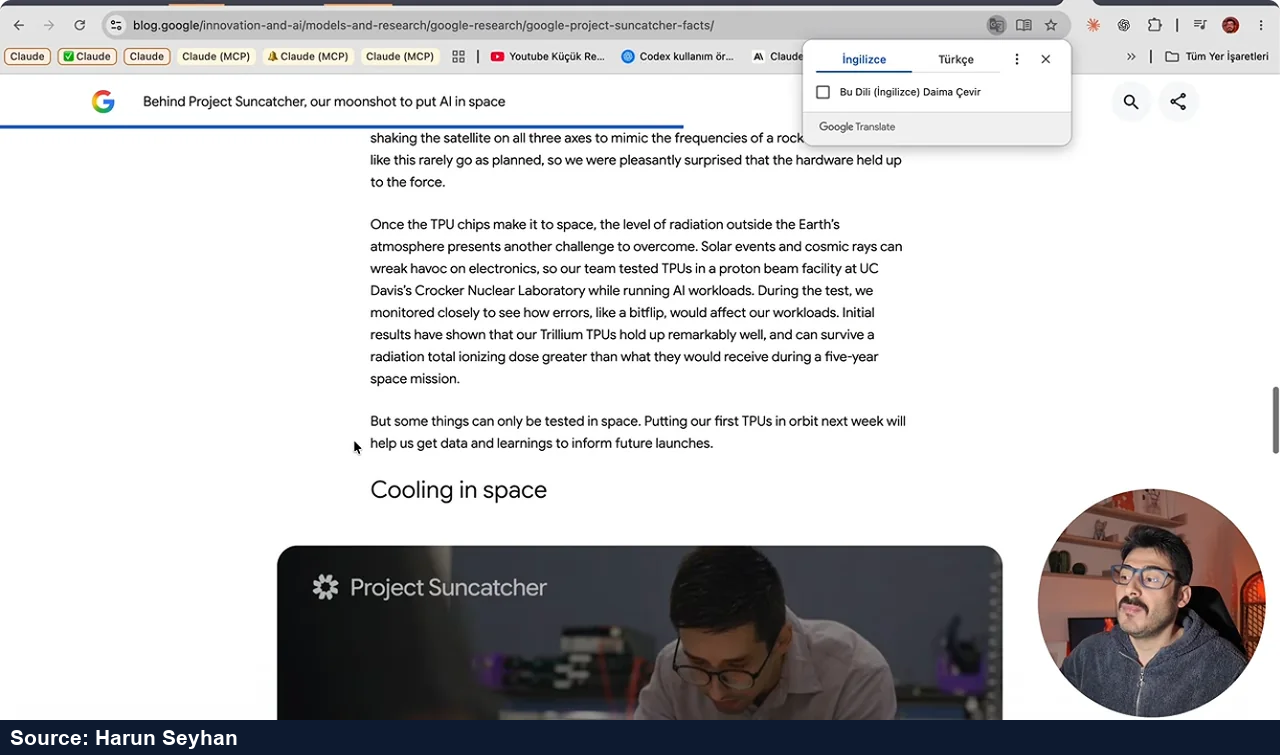
A different section of the background article discusses radiation testing and cooling in space.

The next test stage

Project Suncatcher remains a research effort exploring AI computation in space. Google identifies heat and radiation testing as the next stage for the TPU hardware. Its proposed pair of interconnected satellites is a 2027 milestone. The weekly roundup presents the current result as an example of AI research moving beyond terrestrial computing equipment.

The source behind this story

Source:Harun Seyhan ↗Official source · Opens in a new tab

This editorial story is based on the source’s explanations. The creator’s experience and claims are distinct from independently verified findings. Video and source images belong to their respective creators.

Your favourites

This list stays in this browser on your device. No account is needed, and other visitors cannot see it.

Use a story’s bookmark button to add your first favourite.