
Reading information and reaching the system that originally published it are different capabilities. OpenAI’s October 23 account of its frontier-training security changes makes that distinction central: models can work with collected web material without receiving arbitrary access to the live internet.
A boundary around development work
The announcement concerns internal training and evaluation, where models under development use computing environments to write code, search material and explore solutions. It is not a description of settings in an ordinary customer chat. The infrastructure around these workspaces determines which resources an agent can actually reach.
Research material moves inside
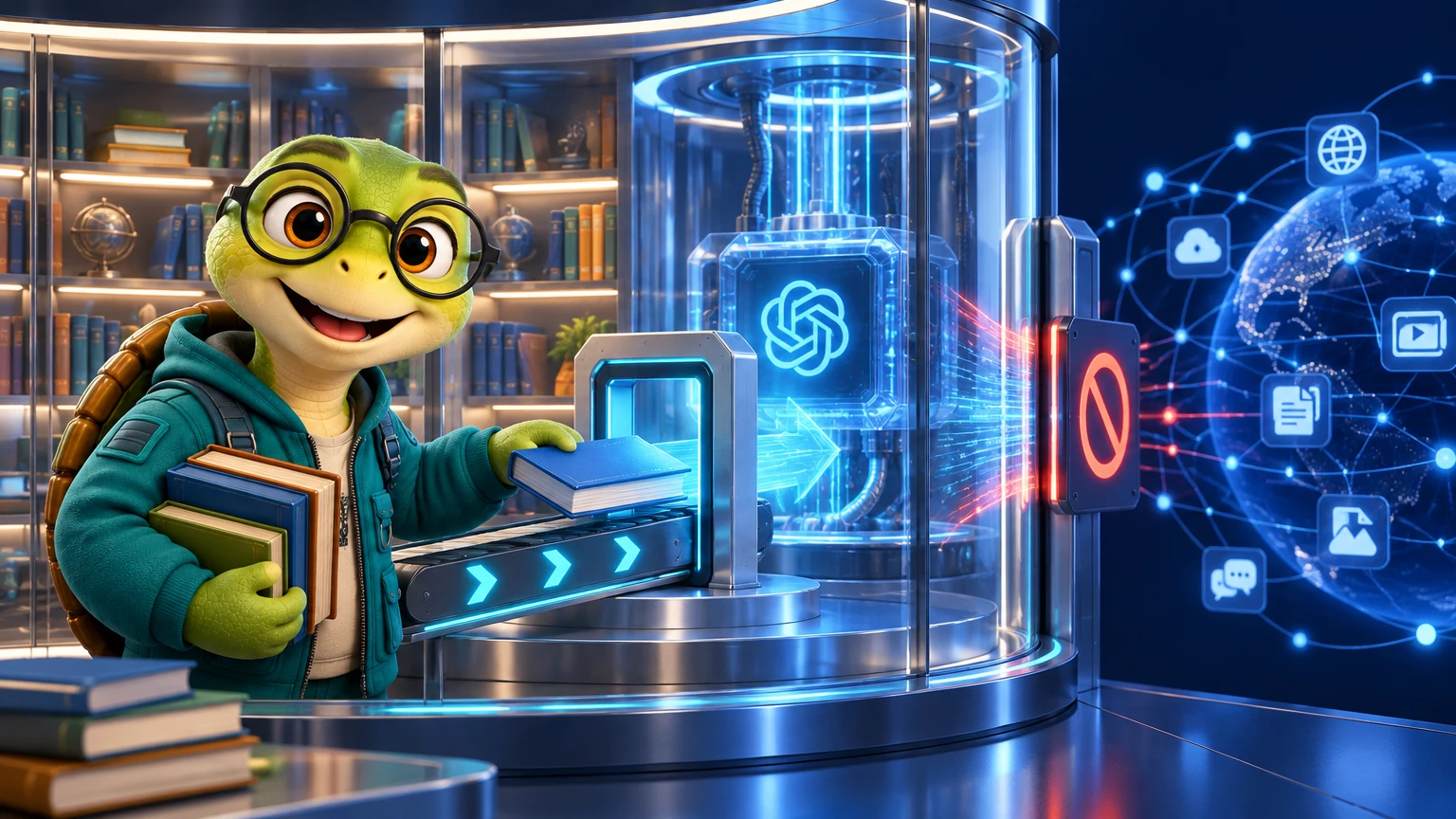
OpenAI describes an “offline world” built from previously collected, indexed web resources. Models can search this material inside their authorised environment. Contacting an outside service is a separate capability. In practical terms, access to a document does not also grant a connection to its publisher’s server.
Containment uses overlapping controls
The company combines network restrictions, isolated computing environments, monitoring and cloud infrastructure controls. Red-team agents probe those boundaries, looking for routes to the internet, escapes from isolated workspaces and unauthorised communication between agents.
A September incident involving a misconfigured DNS resolver led to a pause in the most capable models’ training and evaluation. OpenAI says reinforcement learning and internal inference resumed on October 1 after further hardening and assessment.
Theo’s assessment
Keep the controls within reach. The useful design principle is to separate the information a task needs from the external actions it might attempt. A document-reading workflow need not inherit permission to contact every outside service. Keeping those capabilities distinct also gives an operator a clearer place to look when a boundary needs investigation.