

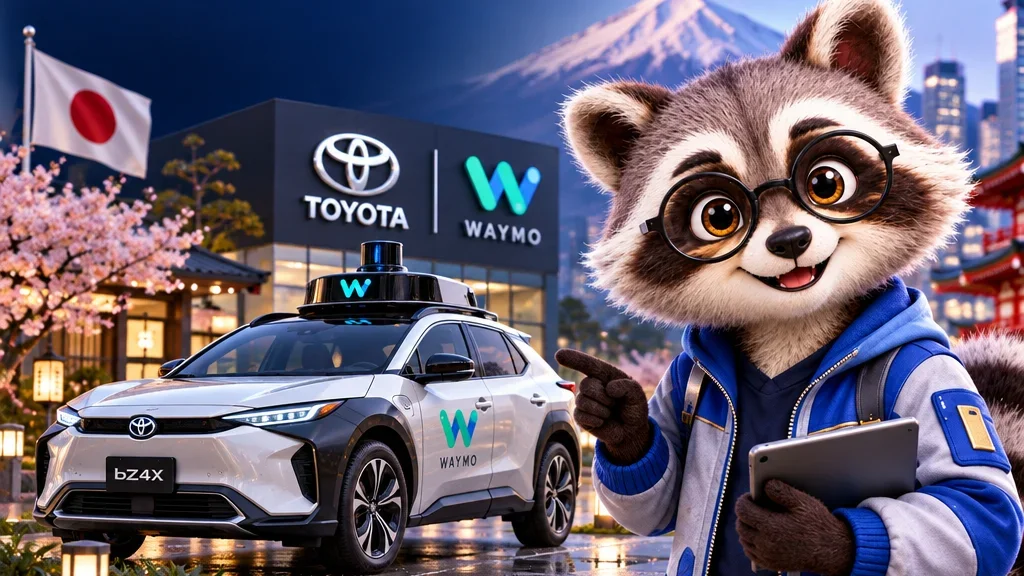
Building a vehicle for driverless rides involves more than adding sensors to an existing car. Toyota and Waymo’s October 30, 2026 announcement gives that work a production platform: a Toyota bZ4X fleet, with initial testing and validation operations planned in Japan in 2027.
Where the vehicle meets the driving system
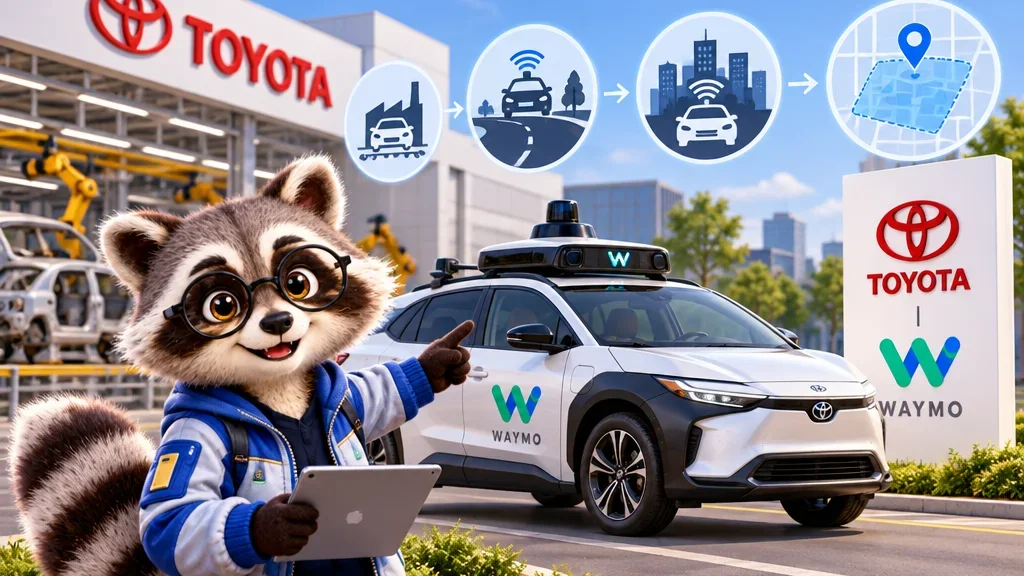
Following their preliminary 2025 agreement, Toyota will manufacture the vehicles at its Takaoka plant in Aichi, Japan. Base-vehicle assembly and integration of Waymo’s autonomous-driving hardware will happen at the same facility.
This helps explain why the partnership goes beyond a software agreement. Sensing hardware, vehicle construction and the driving system all have to work as parts of the same fleet. The meaningful advance, in my view, is that the scaling plan now has a specific vehicle and manufacturing location behind it.
Testing in 2027, commercial service later
Japan comes first. Woven by Toyota says commercial service will follow initial operations. Deployment in the UK and other Waymo-served markets is planned for subsequent years. The announcement supplies no exact opening day, ride price or fleet size.
That sequence matters to a prospective passenger. Putting a validation fleet on the road and allowing the public to request rides are separate milestones. The 2027 date describes the initial phase; commercial availability and service coverage still need to be established.
What Level 4 means for the passenger
The project targets Level 4 autonomous vehicles. NHTSA defines this as the system handling the driving tasks while occupants remain passengers, within limited service areas. The important question is both who controls the vehicle and under which conditions the system assumes that responsibility.
The purpose-built fleet also differs from an ordinary bZ4X bought by an individual. Autonomous technology for personally owned Toyota vehicles remains an area for further exploration. The fleet announcement does not add the same capability to existing consumer cars.
Reading the safety claim in context
Waymo co-CEO Dmitri Dolgov says its existing operations are up to 20 times safer than human drivers for serious crash injuries. The company’s Safety Impact site compares rider-only operation with human driving benchmarks in comparable areas on surface streets. That is a different evidence base from results for a Japanese fleet that has yet to undergo the announced testing.
The vehicle design includes automatic doors, a power liftgate and generous rear legroom. These features address getting into and out of the vehicle as well as the automated journey itself. For passengers, the useful outcome will be manufacturing scale translated into a validated service they can actually access.