
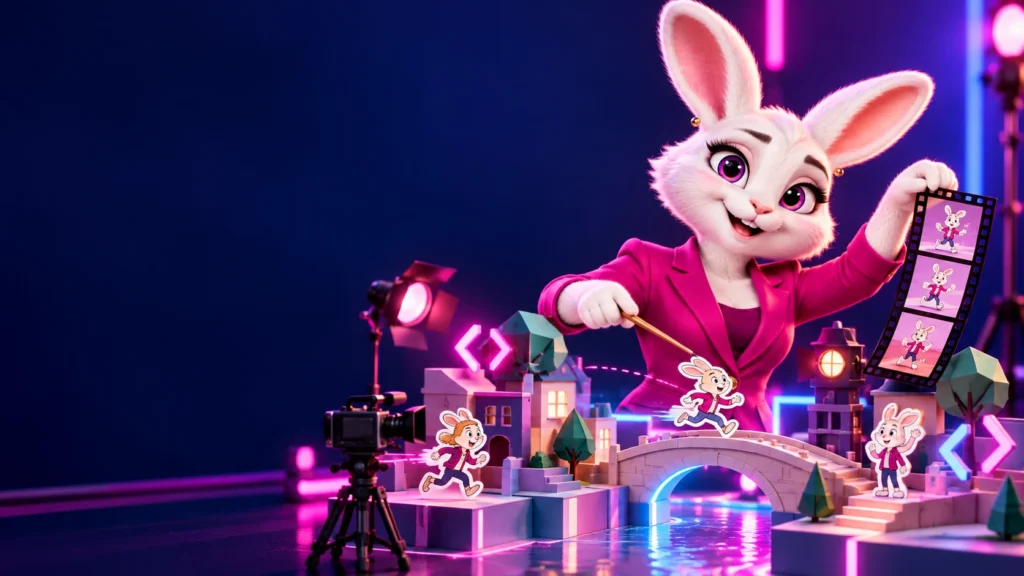
A short animation does not have to begin with a video model generating a finished clip. Its scene, character movement and camera can be built in code, then rendered along a timeline. That approach gives a creator smaller decisions to inspect and revise.
Give the tools different jobs
Three.js contributes the three-dimensional scene; Remotion supplies the video and timing structure. Remotion’s @remotion/three package connects React Three Fiber scenes with frame-based video work. A known frame can become a repeatable checkpoint for how an action appears.
The open Claude Animated Shorts project by mromidev is one example of a skill built around these tools. Its code and documents use an MIT licence, while the reference frames are included for style study. Designing an original story, cast and voice keeps reusable technical structure separate from creative material.
Choose one question for the audience
Consider an original example: a small desk robot notices an enormous shadow, then discovers the position of the lamp causing it. That proposed story has curiosity, a visible explanation and a change. Each shot can serve that one question instead of adding events simply to fill time.
Turn the idea into shots
A first plan might contain three shots: introduce the robot and shadow together, reveal the light source, then connect the robot’s movement to the changing shadow. For each, record duration, camera direction, focal object and the detail the viewer should notice. This gives a coding request something more actionable than “make a beautiful animation.”
Keep character proportions, the palette and object dimensions in a shared visual note. It then becomes easier to notice a robot changing size between shots or a light moving without a narrative reason.
Inspect stills before committing to the full video
Review the beginning, middle and end of important actions. Can the movement be read? Does the camera pass through an object? Is the focal detail inside the frame? If there is text, is it legible at a small viewing size? Fixing those questions early can avoid finding the same problem after a long render.
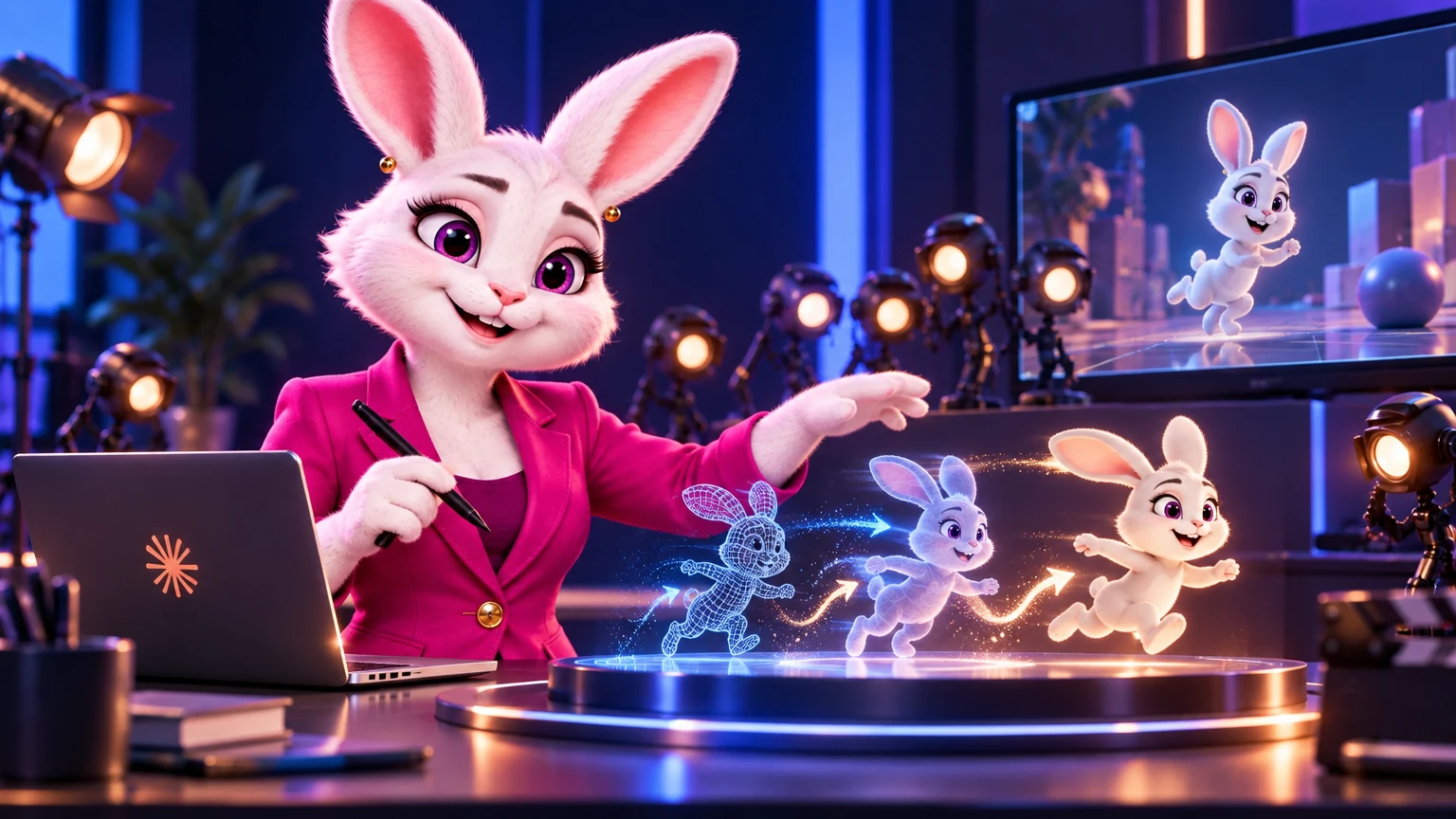
Then check time as well as appearance
A short preview can reveal a camera jump that still images cannot show. Narration and the image should allow the audience to understand the same moment. Sound effects can have a story purpose rather than accompanying every movement by default.
Parallel work needs file ownership
Camera, characters and audio can become separate assignments. Give each a file boundary and shared acceptance conditions. When separate working copies are merged, review the whole scene again. Pieces that work independently still need their colour, movement and timing to fit together.
Ruby’s assessment
A little twist can change the story. With coded animation, a small event the audience can follow is a strong creative starting point. Choose what the scene needs to communicate, then let the camera and motion serve it. More tools are less useful than a clear reason for the next shot.
