A model for choosing
According to the Last Week in AI channel, CLM-8B takes a different approach to small AI decisions: it scores possible actions instead of composing a long answer. Andrey Kurenkov and Jeremie Harris explain the release in podcast episode 259. The model receives the current situation and a set of candidate actions, then indicates which choices fit best.
The episode describes it as a System One model: a fast decision component that can sit inside a larger agent. A language model can still handle broader reasoning, while a smaller specialized component chooses between defined options. The discussion compares this role with Jev, another service for structured decisions.

How the scoring works
The channel describes a frozen eight-billion-parameter base model with a much smaller trainable projection head of about 20 million parameters. The base converts text into numerical representations, and the added component helps compare situations with candidate actions. Reused candidates can be stored so that they do not need to be encoded again for every decision.
The project’s playground makes this visible with typed questions: a yes-or-no answer, a choice between departments, or a score. Its example combines a customer message with separate decisions about urgency, department and frustration. The output is a distribution across available answers, rather than a free-form paragraph.
Speed, tests and availability
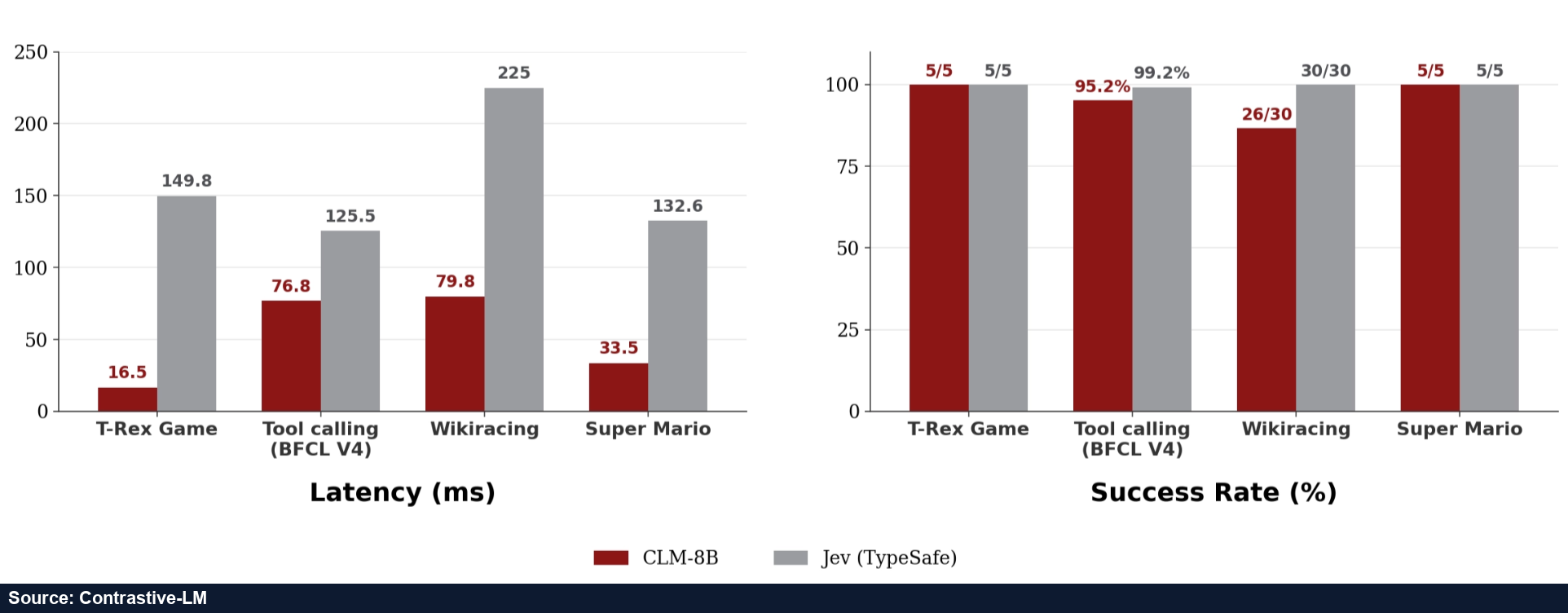
The channel reports speedups of up to nine times over Jev in the project’s tests. These tests include the T-Rex game, tool calling, WikiRacing and Super Mario. The comparison records both response time and success rate, so the speed figure belongs to the tested tasks.
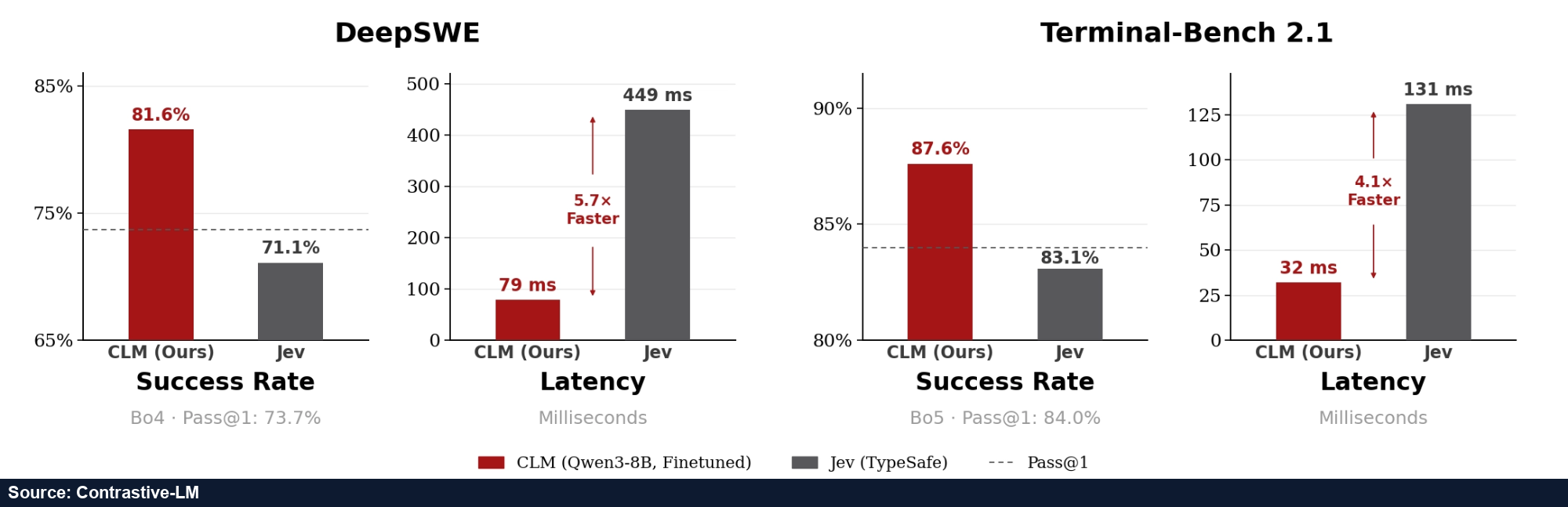
The project also tests CLM as a verifier: it chooses among candidate solutions for software tasks instead of writing all solutions itself. The published charts include DeepSWE and Terminal-Bench 2.1. Code and model weights are available under Apache 2.0. Kurenkov and Harris connect the release with a wider range of compact decision models that can be combined with larger language models.