

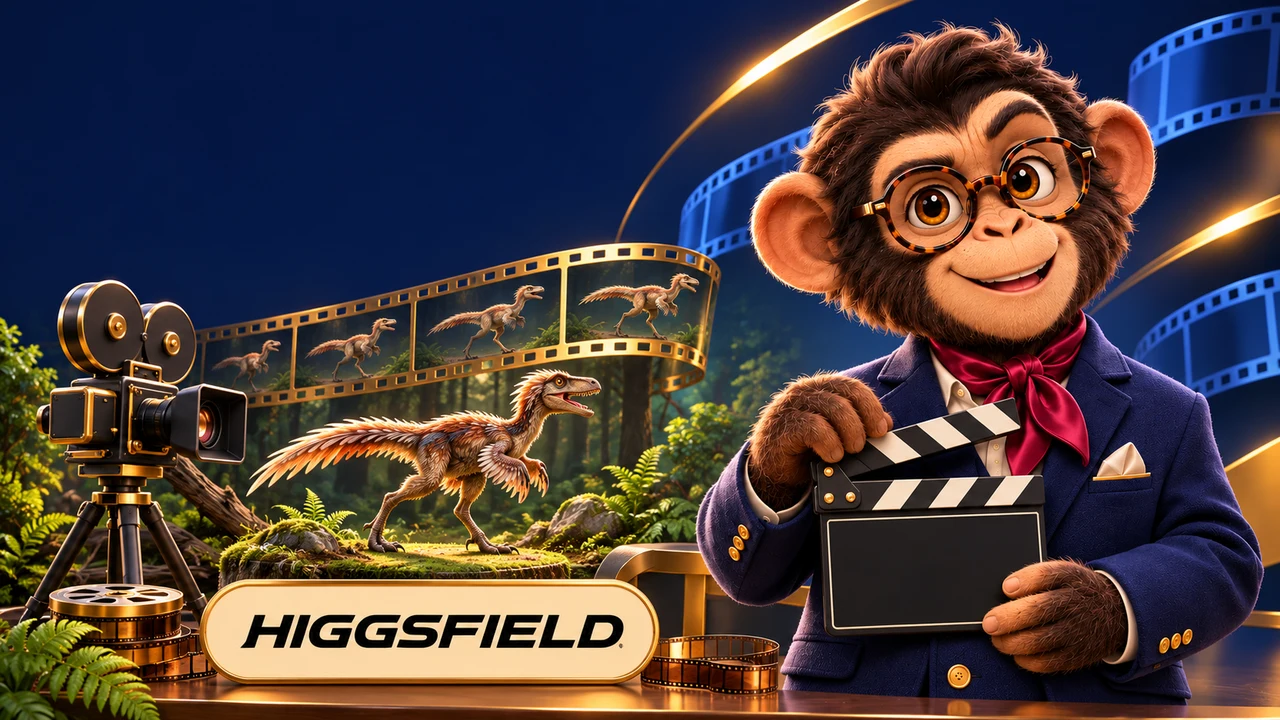
A creature may have convincing feathers while its feet slide across the ground. That is why an AI-versus-VFX comparison needs more than an attractive still. The useful question is whether the shot keeps its identity, performs the required action and remains controllable through revisions.
Read the experiment on its own terms
In its dinosaur-shot experiment, Higgsfield AI compares an AI version with traditional VFX. The invited effects artist favours the traditional approach for bespoke creature animation. The presenter reports eight hours of AI work. That duration and the headline’s $10,000 figure do not provide a shared accounting of the complete production scope.
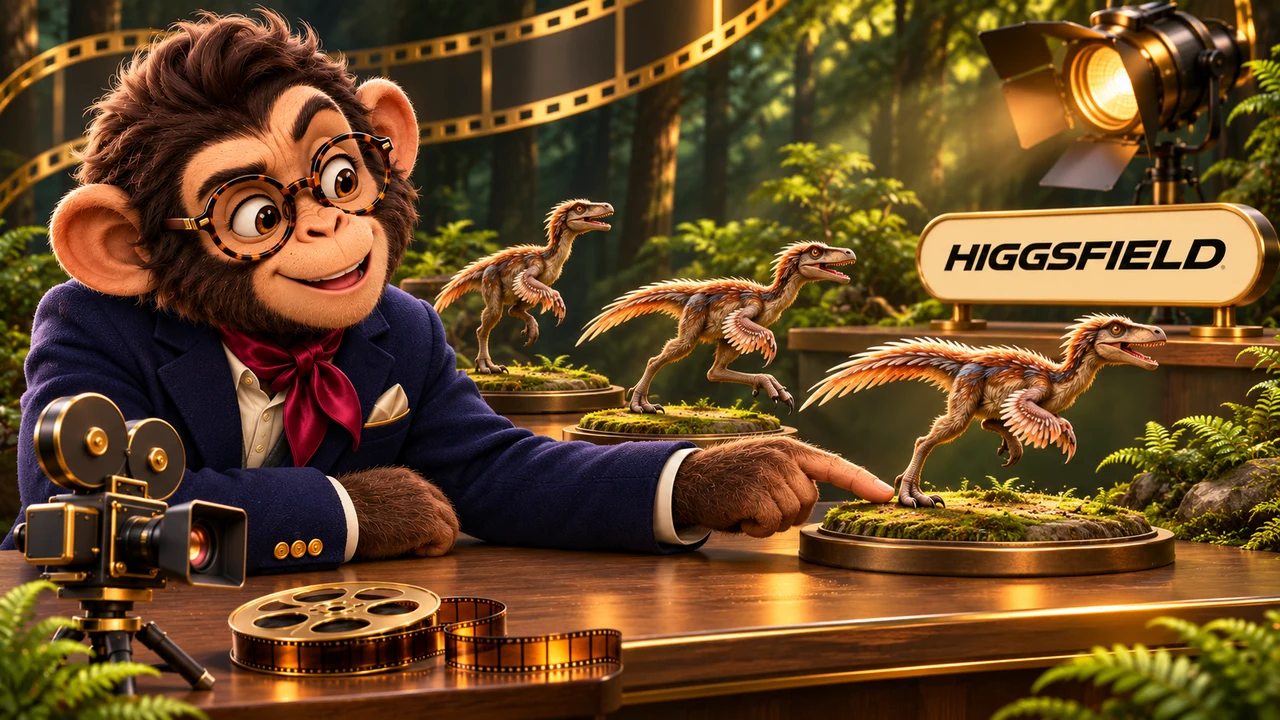
Image appeal, motion and control are different goals
Start with three separate judgements. Does the image have coherent lighting, texture and depth? Does the movement hold together over time, with grounded feet and a body responding to each step? Can you change the requested action while preserving the successful face, framing and setting?
A strong result in one category can hide a weakness in another. Cinema Studio’s documentation describes reusable Elements for characters, locations and props, alongside camera controls. These are useful production controls; their presence still leaves the editor with a result to judge.
Give each reference one clear responsibility
An identity reference, a placement sketch and a motion guide communicate different things. Tell the system which job belongs to which file. If the creature appears in the wrong place, clarify the layout before changing its texture. If the action feels weightless, describe the sequence of body responses rather than adding more visual adjectives.
Higgsfield’s stability guide recommends inspecting a clip over time and distinguishes a local correction from regenerating a faulty action. That is a practical way to organise revisions: a colour adjustment and a change of movement require different interventions.
Cecil’s assessment: Compare accepted shots
To choose a production method, give both routes the same footage you are entitled to use and one explicit motion target. Define acceptance criteria before reviewing: stable identity, the required direction of travel and a consistent camera path. Record rejected attempts, human work and finishing time.
You can then compare the effort behind an accepted shot, rather than the price of the first output. A quick visual exploration and a delivery requiring repeatable, precise action have different needs. Now, let’s see how the scene holds together: the next shot must preserve the character and continue the action before the sequence is ready.