
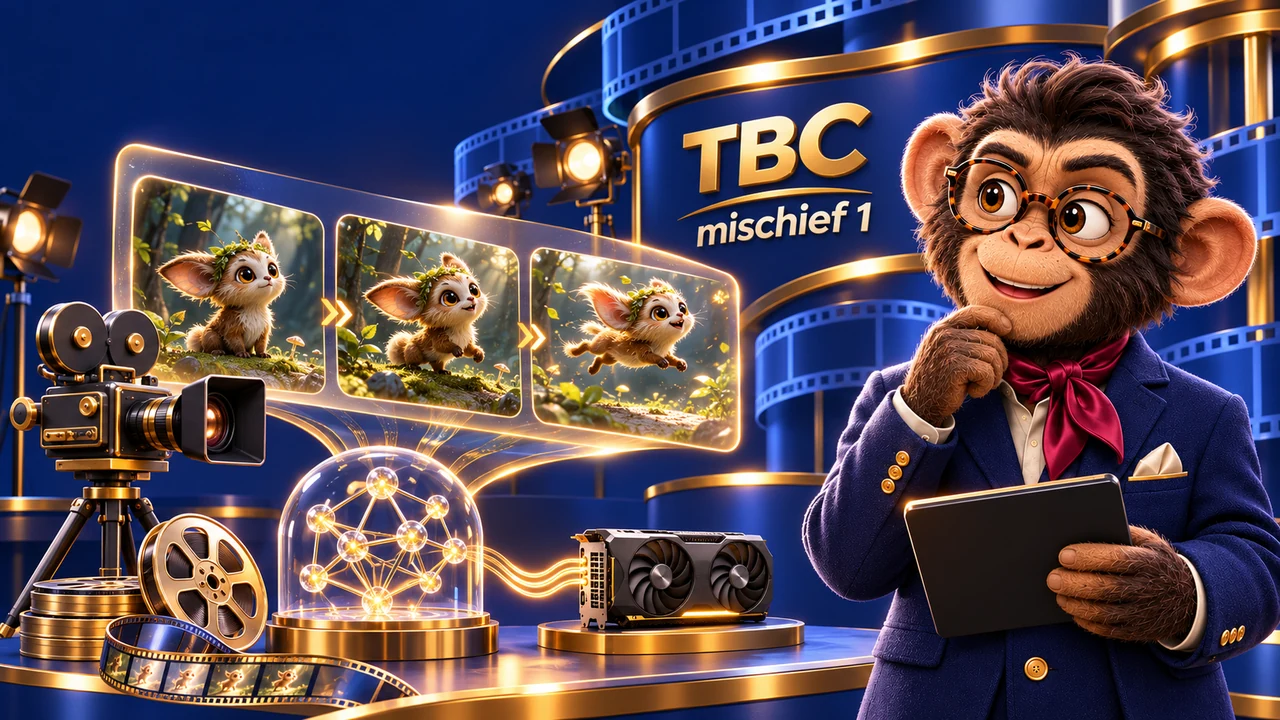
Animating a single strong image is a concrete starting point for AI video. TBC’s Mischief 1, announced on October 30, focuses on that task. Alongside its research story, the available clip lengths and resolution choices shape how a creator might plan a sequence.
Biological discovery becomes software
TBC’s announcement describes a software layer built on Wan 2.2. The company says computational insights from laboratory neuron research are translated into code. The customer’s video is generated by software running on standard AI hardware.
In TBC’s explanation, biology belongs to the discovery process. The company reports a fivefold speed improvement in its own comparison. For a working creator, the practical value also depends on how many attempts produce a usable shot.
Resolution changes the arithmetic
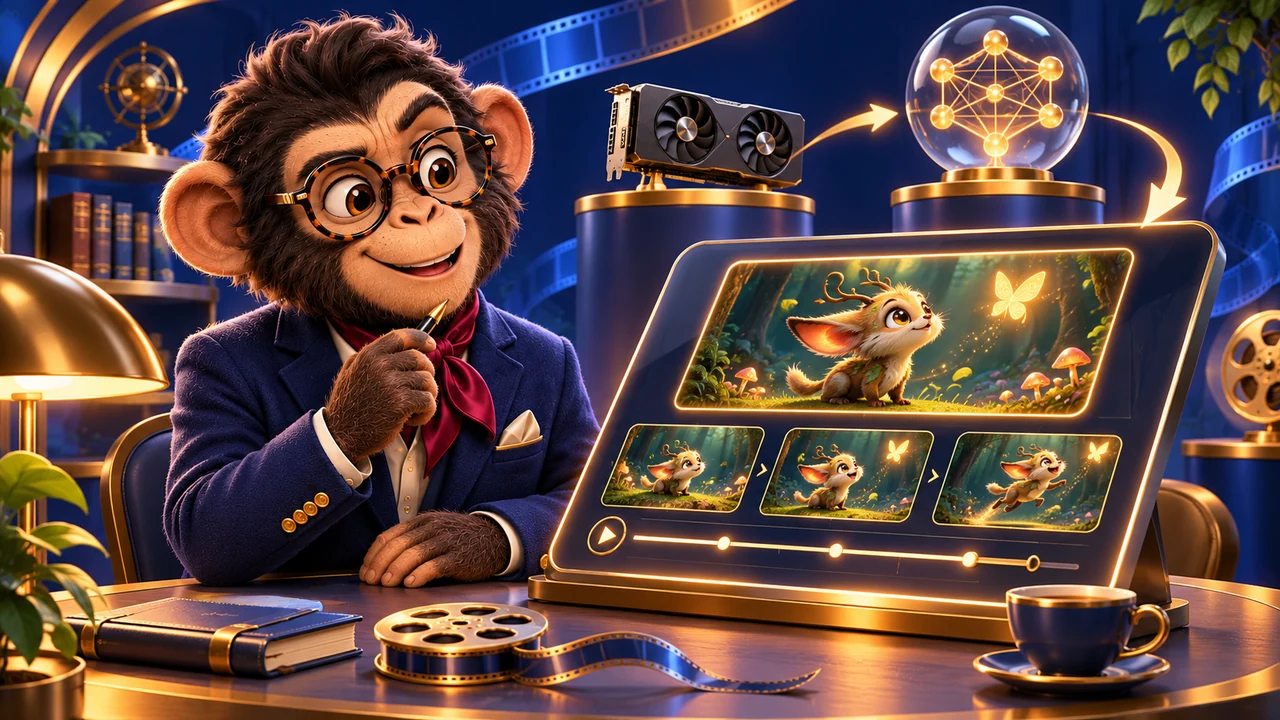
The current fal listing charges $0.005 per requested second at 480p and $0.01 at 720p. A five-second generation therefore costs $0.025 or $0.05 respectively.
The endpoint schema offers three- or five-second durations and 480p or 720p resolution. A starting image and a prompt define the requested shot.
As a planning example, ten attempts at a five-second shot would cost $0.25 at 480p or $0.50 at 720p using those rates. Ten attempts is an illustrative workload. Preparing the input image and editing the eventual footage are separate stages of the production.
Define what the shot needs to do
If a character must turn its head, identity consistency and camera movement are two distinct choices. Deciding which motion actually matters gives the resulting frames a clearer basis for comparison. It also makes a resolution change easier to assess against the intended use.
My question here is what survives into the next frame. Comparing clips with the same starting image and motion target helps connect visual judgment with the cost of iteration. The unit price then becomes part of a production decision, alongside whether the footage fits the scene.