

If you budget an AI project from the price list, Claude Fable 5.2 looks like a saving. Anthropic’s pricing table lists it at $8 per million input tokens and $40 per million output tokens, down from $10 and $50 for Fable 5.1. That is 20 percent less per token. The independent benchmark firm Artificial Analysis measures something else: at the Max effort setting, one task of its Intelligence Index costs $26.54 with Fable 5.2, against $12.99 for Fable 5.1 at the same setting. The price per token fell, and the bill per task roughly doubled.
Why the cost per task rose
The answer lies in how much the model writes. A token is the small unit of text a model reads and produces, and every one of them is billed. According to the Artificial Analysis model pages, Fable 5.2 at Max generated 275 million output tokens to complete the index. Fable 5.1 at Max needed 163 million, and the median of comparable models is 72.8 million. A 20 percent discount per token cannot make up for roughly two thirds more output.
What that output buys is the top score. Fable 5.2 at Max reaches 65 points and ranks first of 74 models, where the median is 40 and Fable 5.1 at Max scored 49. On cost per task, the same configuration ranks 73rd of 73.
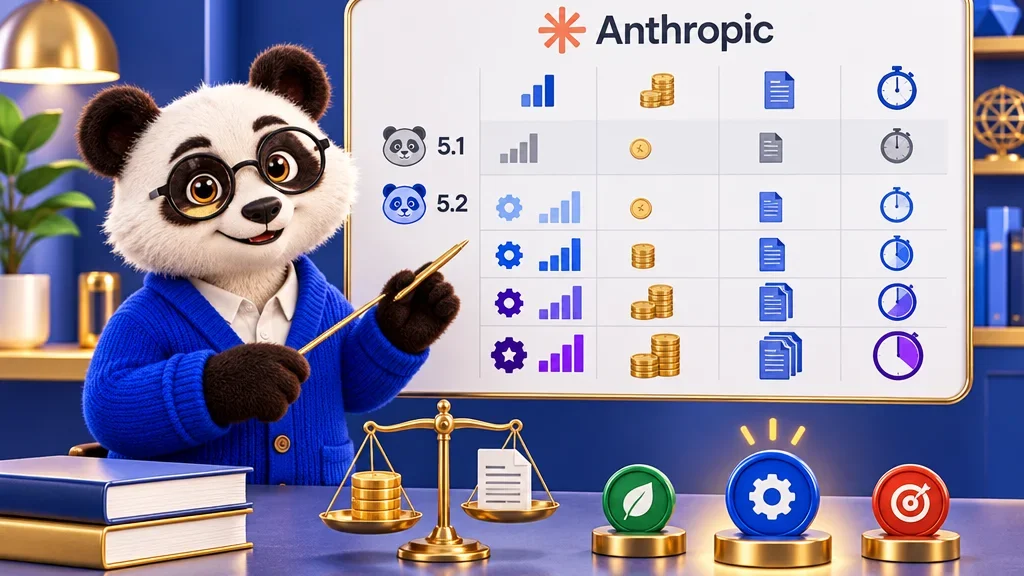
What “cost per task” measures
Artificial Analysis describes the figure as a weighted average. For each evaluation in the index, the cost is calculated from token prices (input, cache hits, cache writes, reasoning and answer), divided by the number of tasks, and then weighted by that evaluation’s share of the index. Reasoning tokens count, so a model that thinks longer costs more even when its final answer is short.
This is a cost for benchmark tasks at API prices. Your own tasks may be lighter or heavier, so read the number as a like-for-like comparison between models and settings and not as a forecast of your invoice.
How the effort level changes the bill
Effort is the setting that controls how much the model reasons before it answers. Artificial Analysis lists Fable 5.2 separately for each level, and the differences are large. At Medium the model scores 56 points for $3.80 per task and takes 8.1 minutes per task. At High it scores 62 for $9.08 and 17.5 minutes. At xhigh the score stays at 62, while cost rises to $14.83 and time to 26.1 minutes. Max brings 65 points for $26.54 and 44.4 minutes per task. The median model needs 12.8 minutes, and Fable 5.1 at Max took 22.5.
Our assessment: start at High, justify Max
The following is our reading of these figures, not a claim made by either source. High delivers 62 of the 65 points for about a third of the Max cost and well under half the time. For most work that is the sensible default. Medium is the economical choice for routine tasks: 56 points still places it ninth of 74 models, at less than half the cost of High.
In this index xhigh adds cost and waiting time over High without adding points, so we would only use it if your own tests show a difference. Max earns its place when a problem is hard enough that three extra index points outweigh almost triple the cost of High. Choose the fit, not just the size.
One limit applies to all of this: it is a single benchmark with its own task mix. If your work looks different, run a small sample at two effort levels and compare the results before you commit a budget.