


An unanswered customer email, an invoice nobody chased, a contract waiting for a signature: these are the jobs an assistant never touches if it only works when you ask. Anthropic’s Claude Duet is built to go looking for them. The company opened it as a research preview on October 21, 2026, and the details matter more than the pitch.
What Claude Duet is
Claude Duet is a new, separate app in which Claude works as a proactive agent, meaning it starts work and contacts you without waiting for a prompt. Anthropic says it is aimed at professionals and small business owners and is built around the Claude Opus 5.5 model. A research preview is an early release for a limited group, and Anthropic is explicit that this is one.
How it works
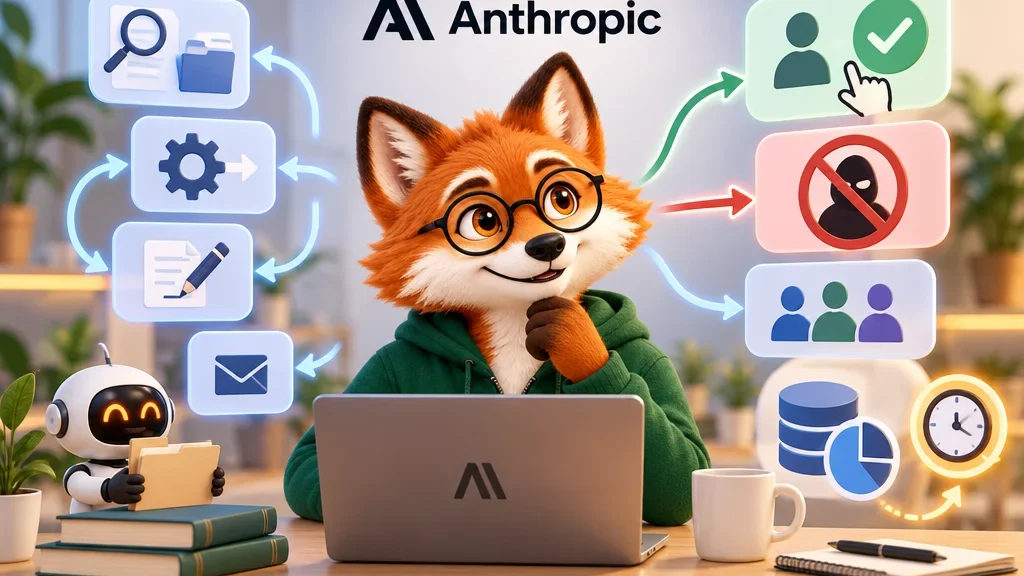
Duet runs on its own virtual machine in the cloud, with its own browser, so your laptop or phone does not have to stay on. You message it by text or voice in a single ongoing thread. It carries over the memory, skills and connected apps from your Claude account.
Each morning it sends a short brief on the most important items across your connected apps. After that it checks those accounts every few hours. Anthropic stresses that this is periodic, not continuous, and gives the reason: to conserve your usage limits. It is designed to message you only when something needs attention, and you can set what you want to hear about and how often.
What it can take on
The examples range from administrative work, such as scheduling a meeting, to larger jobs like building dashboards, financial or sales forecasts, prototypes and web apps. Anthropic points to more than 6,000 connectors and plugins. Its own examples include finding missed Gmail or Slack messages, checking QuickBooks or Stripe for unpaid invoices and drafting reminders, preparing Gusto payroll for review, and getting agreements ready to send through Docusign.
Where it has to stop and ask
Duet reads, drafts and prepares on its own. Before it sends a message, makes a payment, signs a document or deletes anything, it shows you the action and waits for your approval. You can also disconnect any app it has access to.
Two things stay off the table even if you approve them: trading securities and moving money between accounts. Anthropic adds that a dedicated classifier and system prompt are designed to reject requests to share the most sensitive tier of information, such as credit card numbers and government ID, while health and personal finance details are shared only when you explicitly instruct it to.
Who can use it
For now, only users in the United States, starting with Pro, Max and Ultra subscribers, and only through a waitlist. Team and Enterprise plans are not included yet. Duet is a standalone app for iOS and Android; on a computer it runs in the browser at claude.ai.
What it costs
No separate price is listed. Duet shares your plan’s usage limits with the rest of Claude, and the background checks count toward them. Larger tasks, such as a financial model or a slide deck, need more model turns and more background work.
Known limits and what comes next
Anthropic lists the weak points itself. Duet may misread a thread or misjudge what is urgent, and it can miss something that arrives between check-ins. It cannot yet show you its browser. Personal errands, such as booking tickets, are weaker because the focus is work. Announced as coming: signing in to sites with logins saved in 1Password, with your permission, and a visual Shopify storefront editor.
My assessment starts with the approval list, because that is where the design is decided. Send, pay, sign, delete: those four verbs mark the line between preparing work and committing you to something, and Duet stops at each one. Who takes the next step? At exactly those points, you do. The second detail is easier to overlook. A check every few hours makes Duet a way to catch what slipped, not a real-time alarm, so anything that cannot wait a few hours still needs its own alert. And since every background check draws on the same limits as your normal Claude use, it seems sensible to connect a few apps first and narrow what it reports before widening the circle. That last part is my inference from how the limits are described, not a recommendation Anthropic makes.